Tag: Digital Marketing

  • Best CRM Software for Small Businesses in 2026

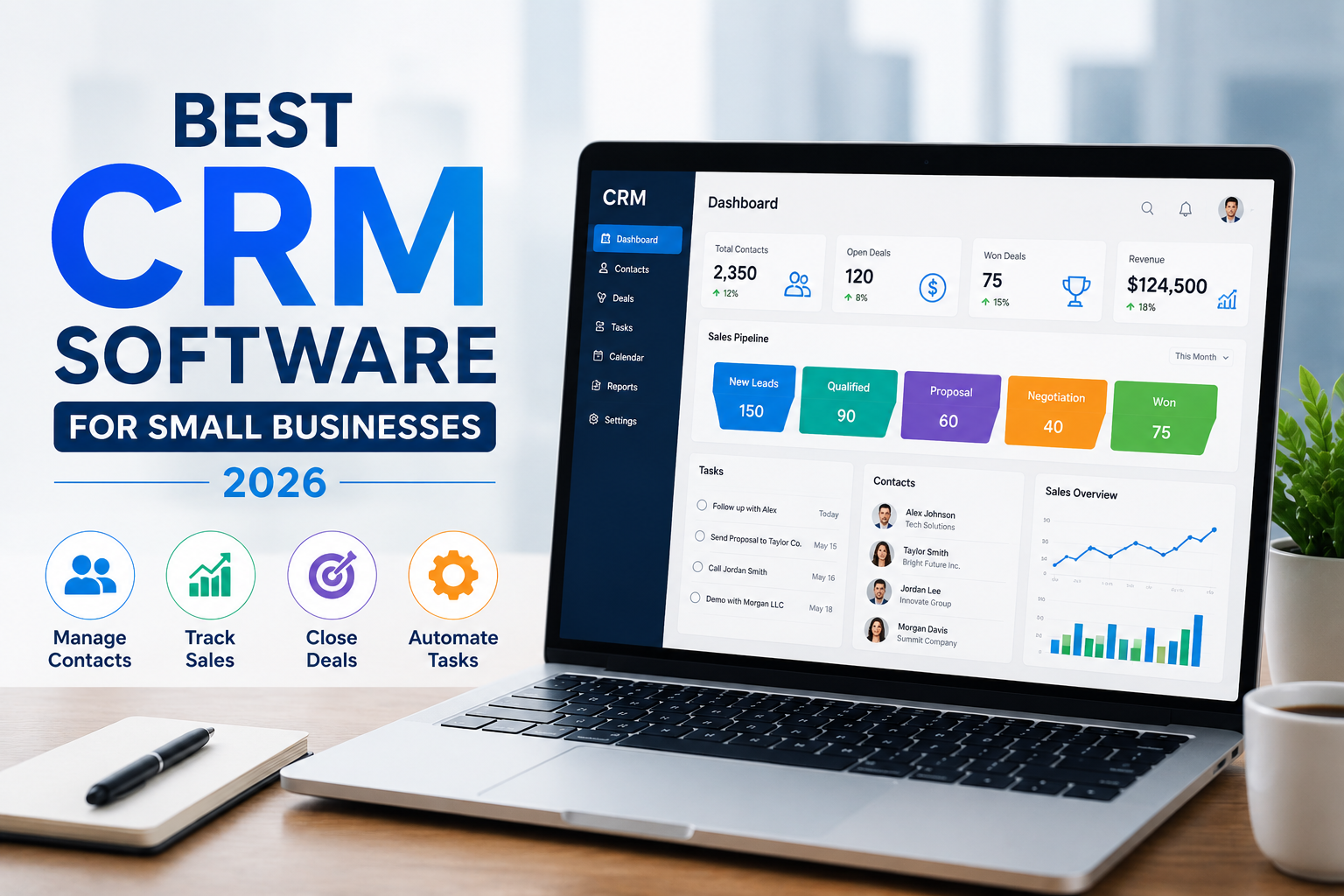
    Best CRM Software for Small Businesses in 2026

    Choosing the best CRM software can make a major difference in how a small business manages leads, customers, sales, and daily communication. A good Customer Relationship Management (CRM) platform helps businesses organize customer information, track sales opportunities, automate repetitive tasks, and build stronger customer relationships.

    For U.S. small businesses, the right CRM should be affordable, easy to use, scalable, and capable of supporting sales and marketing without creating unnecessary complexity. In this guide, we’ll explain what to look for when choosing the best CRM software in 2026 and highlight some popular options worth considering.

    What Is Best CRM Software?

    CRM software is a business tool that stores and organizes customer and prospect information in one central system. Instead of keeping customer details across spreadsheets, emails, and different applications, businesses can use a CRM to manage everything from one dashboard.

    Most CRM platforms allow businesses to track leads, manage contacts, monitor sales pipelines, schedule follow-ups, and analyze sales performance. Some also include marketing automation, customer service, reporting, and artificial intelligence features.

    Why Small Businesses Need Best CRM Software

    A CRM can help small businesses save time and avoid losing valuable sales opportunities. When customer information is organized, sales teams can quickly see previous conversations, upcoming tasks, and the current stage of each deal.

    The best CRM software for small businesses can help you:

    • Organize leads and customer contacts
    • Track sales opportunities
    • Automate follow-up tasks
    • Manage email communication
    • Monitor sales pipelines
    • Improve customer service
    • Generate business reports
    • Track team performance
    • Reduce manual data entry

    For growing U.S. businesses, these features can create a more organized sales process and make it easier to turn leads into paying customers.
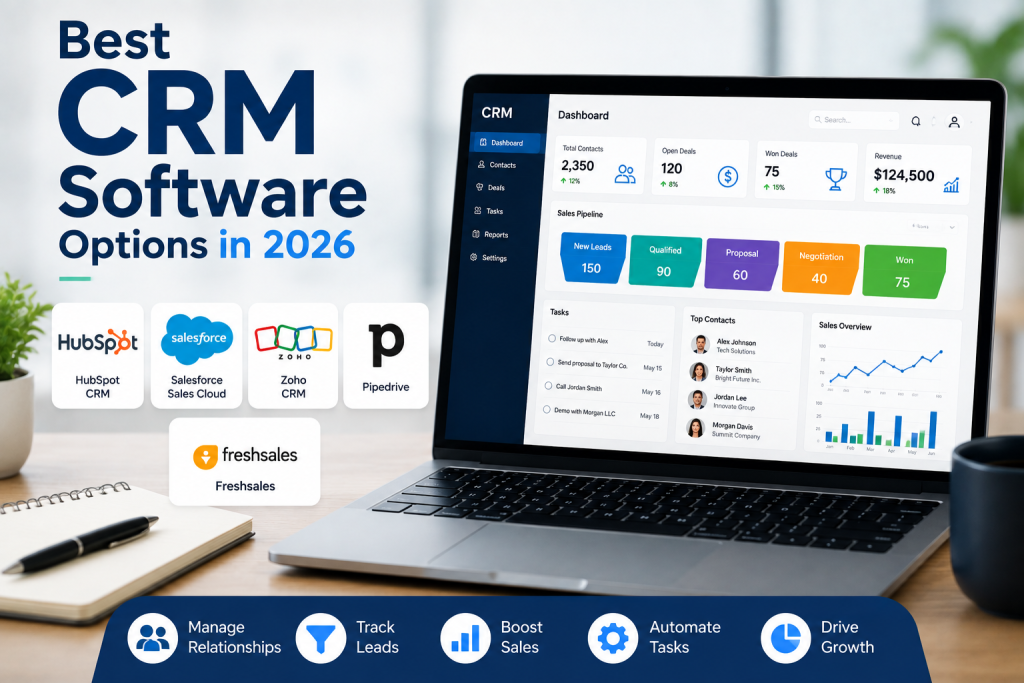
    Best CRM software options in 2026 for small businesses

    Best CRM Software Options in 2026

    There is no single CRM that is perfect for every company. The best choice depends on your business size, budget, industry, sales process, and required features.

    1. HubSpot CRM

    HubSpot CRM is a popular choice for small businesses that want an easy-to-use platform with sales, marketing, and customer management capabilities. Its interface is designed for businesses that want to get started without a complicated setup.

    It can be particularly useful for startups and small teams looking for a CRM that can grow alongside their business.

    2. Salesforce

    Salesforce is one of the best-known CRM platforms and is designed for businesses that need extensive customization and advanced capabilities. It can support more complex sales processes and larger teams.

    However, smaller businesses should carefully evaluate the platform’s features and costs to determine whether its capabilities match their actual needs.

    3. Zoho CRM

    Zoho CRM is another strong option for small and growing businesses. It provides tools for contact management, sales automation, reporting, and customer relationship management.

    Businesses looking for a balance between functionality and affordability may find Zoho CRM worth considering.

    4. Pipedrive

    Pipedrive focuses heavily on sales pipeline management. Its visual approach can make it easier for sales teams to understand where leads and deals currently stand.

    It may be a good choice for small businesses that primarily need a straightforward sales CRM rather than a large all-in-one business platform.

    5. Freshsales

    Freshsales is designed to help businesses manage contacts, leads, conversations, and sales activities. It can be useful for small and medium-sized businesses looking for CRM features combined with sales productivity tools.

    How to Choose the Best CRM Software

    Before purchasing a Best CRM Software, consider your business’s actual requirements. Avoid choosing software simply because it has the largest number of features.

    Start by evaluating ease of use, pricing, integrations, automation, reporting, customization, mobile access, and customer support. You should also consider whether the CRM can grow with your company.

    For example, a small U.S. service business may only need contact management, lead tracking, appointment follow-ups, and email integration. A growing sales team may require advanced automation, reporting, and multiple sales pipelines.

    Final Thoughts

    The best CRM software in 2026 is the platform that fits your business rather than simply the one with the most features. HubSpot, Salesforce, Zoho CRM, Pipedrive, and Freshsales are all worth researching, but the right choice depends on your budget, team size, sales process, and business goals.

    Before making a decision, take advantage of free plans or trials when available. Test the interface, compare essential features, and make sure the Best CRM Software can handle your business as it grows. A well-chosen CRM can help a small business stay organized, follow up with leads more consistently, and build stronger customer relationships.
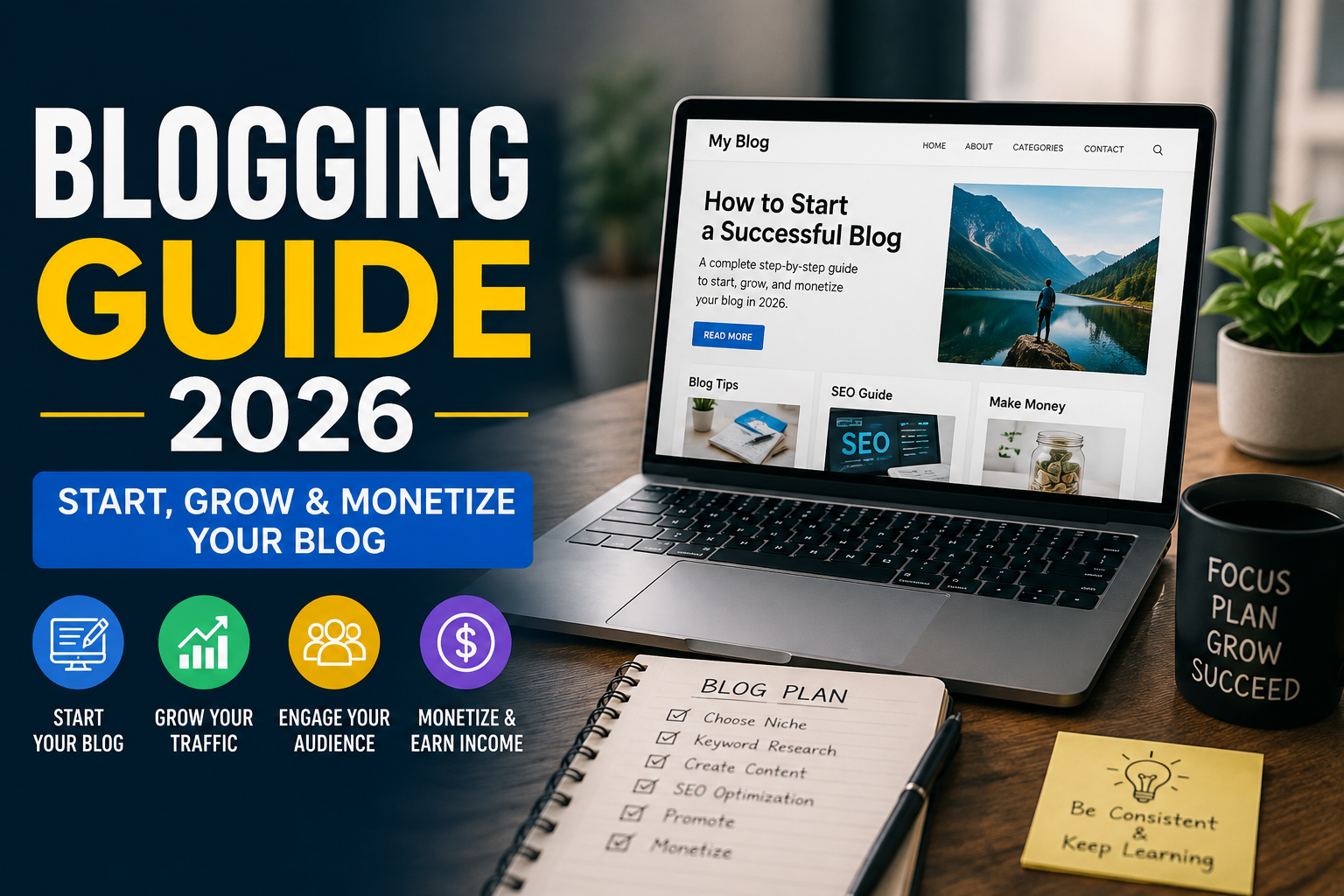
  • Blogging Guide 2026: Complete       Guide for Beginners

    Blogging Guide 2026: Complete Guide for Beginners

    Blogging Guide: How to Start a Blog and Grow It Successfully

    Blogging remains one of the most effective ways to build an online presence, attract organic traffic, and grow a business in 2026. Whether you want to start a personal blog, build a niche website, or use blogging for your business, a clear strategy can help you achieve better results.

    This Blogging Guide 2026 explains how to start a blog, choose the right niche, create SEO-friendly content, attract readers, and eventually monetize your website.

    What Is Blogging Guide?

    Blogging is the process of regularly publishing useful and informative content on a website. Blog posts can cover almost any topic, including technology, finance, health, travel, lifestyle, education, marketing, and business.

    For US audiences, successful blogs usually focus on solving specific problems or answering questions people search for on Google and other search engines.

    The goal is not simply to publish more articles. The goal is to create helpful, original, and search-friendly content that provides real value to readers.

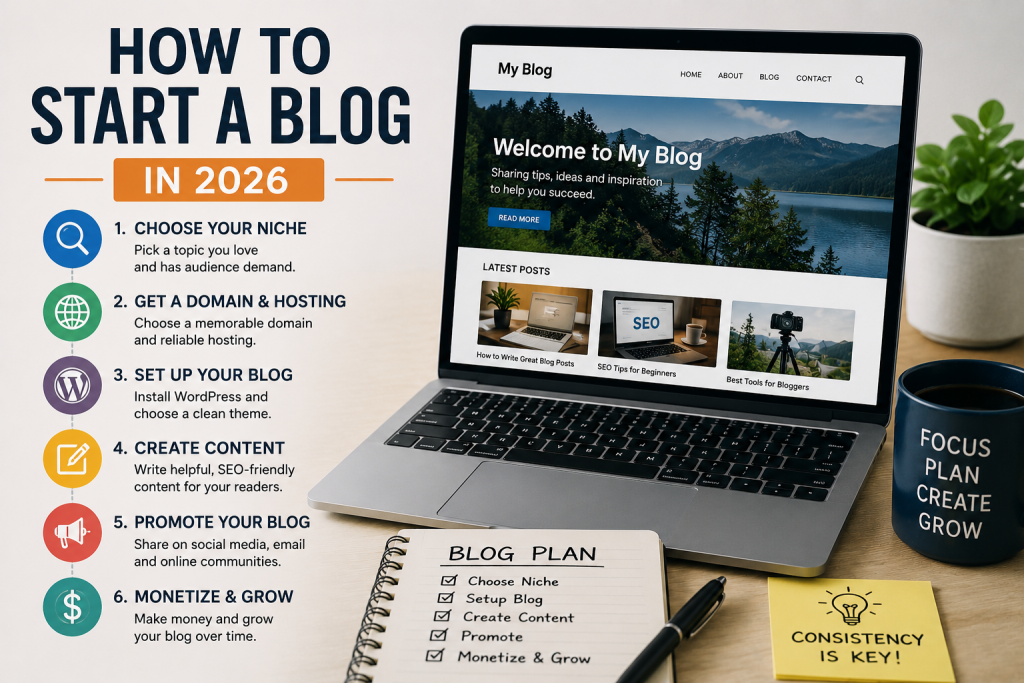
    A modern blog setup illustration showing the key steps to start a blog in 2026, including choosing a niche, domain and hosting, creating content, promotion, and monetization.

    How to Start a Blog in 2026

    Starting a blog is easier than ever, but choosing the right foundation is important. Follow these basic steps.

    1. Choose a Profitable Blog Niche

    Your niche is the specific topic your blog will focus on. Choose a subject that has enough search demand and gives you opportunities to publish many useful articles.

    Popular blog niches in the US include:

    • Artificial intelligence and technology
    • Personal finance
    • Digital marketing
    • Real estate
    • Health and fitness
    • Travel
    • Education
    • Software and SaaS
    • Home improvement
    • Career development

    Instead of targeting an extremely broad topic, consider starting with a more specific niche. A focused website can make it easier to build topical authority.

    2. Select a Domain Name and Hosting

    Choose a short, memorable domain name that is relevant to your brand or niche. Avoid complicated spellings, excessive hyphens, or names that are difficult to remember.

    You also need reliable web hosting. Your hosting provider should offer good performance, security, uptime, and customer support.

    3. Create an SEO-Friendly Website

    Your blog should have a clean and mobile-friendly design. Make sure visitors can easily navigate between categories and articles.

    Important website pages include:

    • Homepage
    • About page
    • Contact page
    • Privacy Policy
    • Terms and Conditions
    • Blog page

    A fast website with clear navigation can also provide a better user experience.

    How to Find Blog Topics

    One of the most important parts of blogging Guide is finding topics people actually search for.

    Start with your main keyword and identify related questions and long-tail keywords. For example, if your main topic is blogging, related searches could include:

    • How to start a blog
    • How to make money blogging
    • Blogging Guide tips for beginners
    • Best blogging platforms
    • How to write a blog post
    • How to get blog traffic

    Long-tail keywords can be particularly useful for newer websites because they often target more specific search intent.

    How to Write SEO-Friendly Blog Posts

    Creating SEO-friendly content does not mean filling an article with keywords. Instead, focus on search intent and usefulness.

    Use your primary keyword naturally in important locations such as the title, introduction, headings, URL, and relevant parts of the article.

    Your content should also include related keywords and answer the questions readers are likely to have.

    Blogging Guide Helps A strong blog post generally includes:

    1. A clear title
    2. A useful introduction
    3. Logical headings and subheadings
    4. Short paragraphs
    5. Relevant examples
    6. Helpful internal links
    7. Trusted external references when appropriate
    8. A concise conclusion
    9. FAQs when they genuinely help readers

    How to Get More Blog Traffic

    Publishing content is only the beginning. You also need a strategy for attracting visitors Blogging Guide.

    Search engine optimization can help your articles appear in organic search results. Internal linking can help search engines understand your website structure and help visitors discover related content.

    You can also promote your articles through social media, email newsletters, online communities, and other legitimate marketing channels.

    For US-focused websites, creating content around US-specific problems, products, locations, regulations, and search behavior can help make your content more relevant to American readers.

    How to Make Money From Blogging

    Once your blog starts receiving consistent traffic, there are several ways to monetize it.

    Common blogging Guide monetization methods include:

    • Display advertising
    • Affiliate marketing
    • Sponsored content
    • Digital products
    • Online courses
    • Consulting services
    • Premium memberships
    • Lead generation

    You do not need millions of visitors to make money. A smaller website with highly targeted traffic can sometimes generate better revenue than a large website with low-intent visitors.

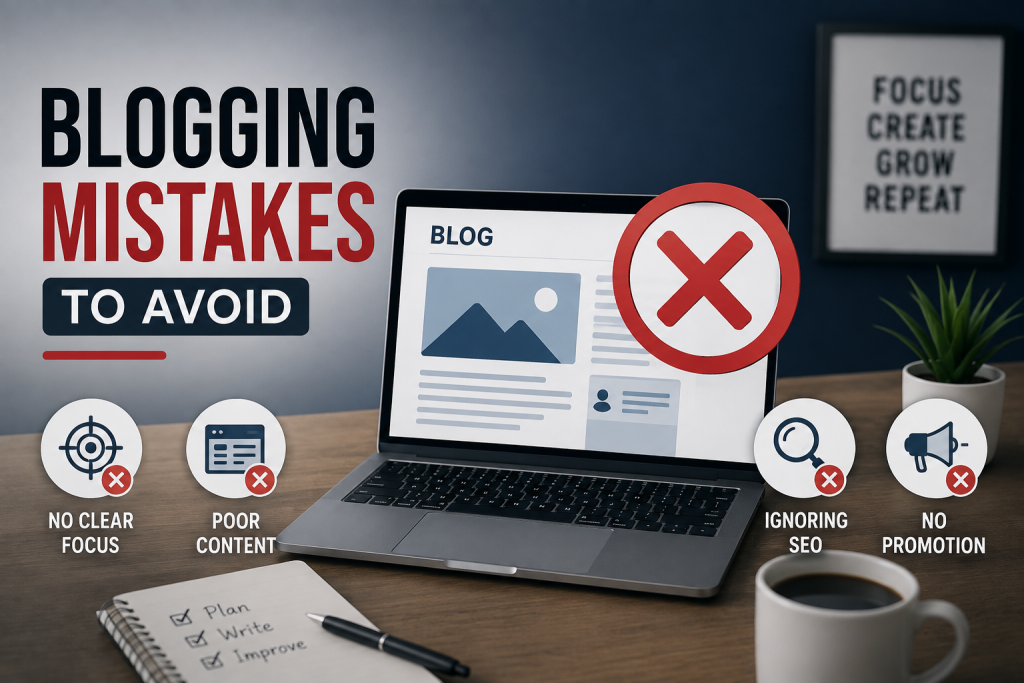
    Blogging mistakes to avoid for beginners

    Blogging Mistakes to Avoid

    New bloggers often make the mistake of publishing random topics without a clear strategy. Other common mistakes include keyword stuffing, copying content, ignoring search intent, using poor-quality images, and expecting immediate traffic.

    Blogging is a long-term strategy. Focus on consistent publishing, improving existing content, building topical authority, and understanding what your audience wants.

    Final Thoughts

    This Blogging Guide 2026 shows that successful blogging requires more than simply writing articles. You need the right niche, useful content, SEO strategy, consistent publishing, and a clear understanding of your audience.

    If you are targeting the US market, focus on creating genuinely helpful content that answers real search queries and provides a better experience than competing pages. With patience and a well-planned strategy, blogging can become a powerful source of traffic, leads, and online income.

  • Content Marketing in 2026: Complete Guide for US Businesses

    Content Marketing in 2026: Complete Guide for US Businesses

    Content Marketing in 2026: Ultimate Guide for Businesses

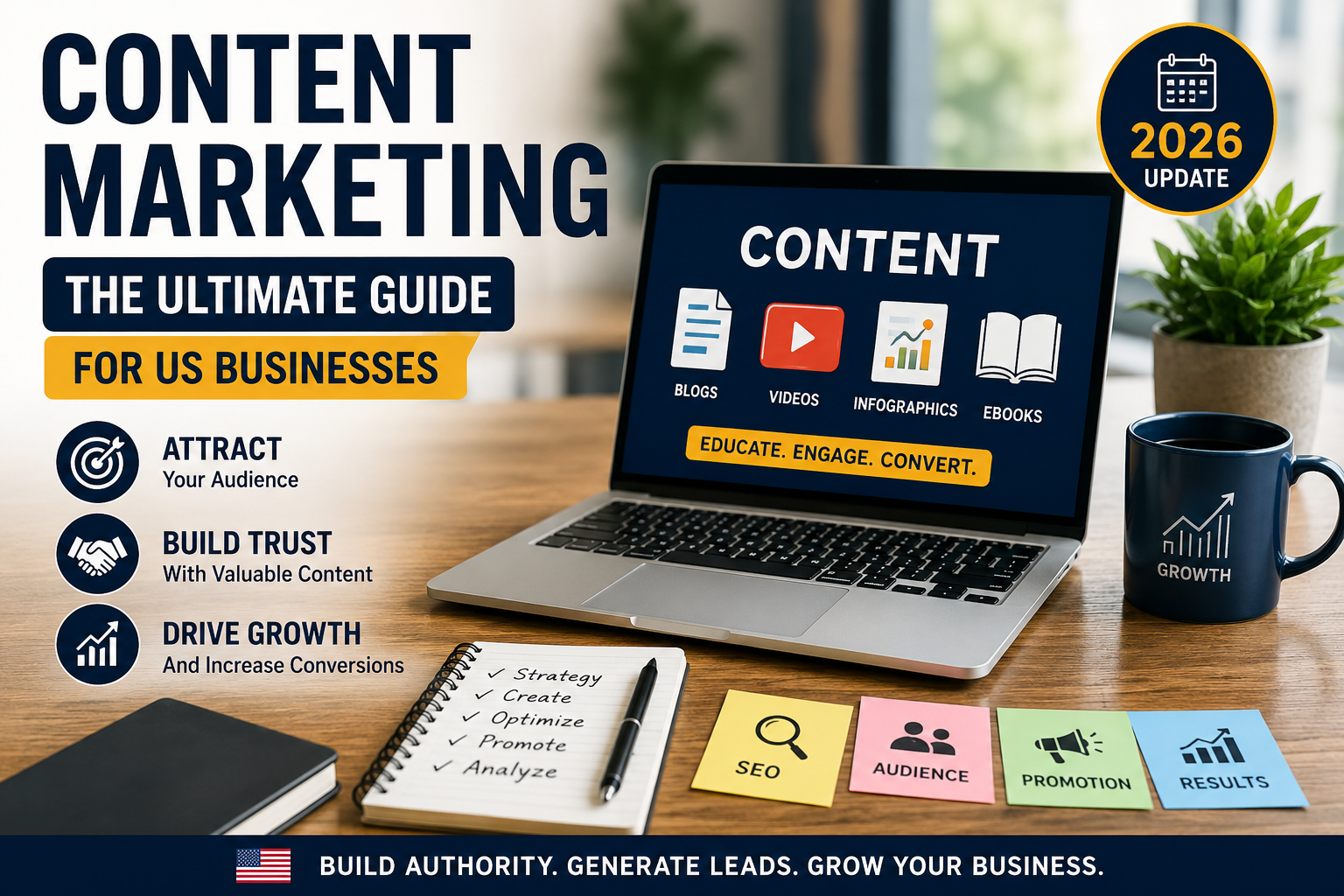
    In today’s digital-first marketplace, Content Marketing remains one of the most effective ways for businesses to attract customers and grow online. A strong content marketing strategy helps brands connect with their audience, build trust, and generate consistent leads without relying entirely on paid advertising.

    Consumers in the United States increasingly research products, services, and companies before making purchasing decisions. Businesses that publish valuable and informative content are more likely to gain visibility, credibility, and long-term customer loyalty.

    Why Content Marketing Matters for US Businesses

    Content Marketing helps companies educate potential customers while improving their online presence. A well-planned content marketing strategy allows businesses to answer customer questions, address pain points, and guide prospects through the buying journey.

    Whether you operate a local business, eCommerce store, SaaS company, or professional service firm, creating useful content can strengthen your brand authority and improve search engine rankings. Search engines reward websites that consistently provide relevant and helpful information to users.

    Benefits of Content Marketing

    The value of Content Marketing goes beyond website traffic. When executed correctly, it can deliver measurable business results.

    Key benefits include:

    • Increased organic search visibility
    • Higher website traffic
    • Better brand recognition
    • Improved customer trust
    • More qualified leads
    • Stronger customer engagement
    • Higher conversion opportunities

    One of the biggest advantages of Content Marketing is its ability to create long-term value. Unlike paid advertising campaigns that stop generating traffic when spending ends, quality content can continue attracting visitors and leads for months or even years.

    Building an Effective Content Marketing Strategy

    A successful strategy starts with understanding your audience. Before creating content, businesses should identify customer needs, common questions, and search behavior.

    Content Marketing performs best when every piece of content serves a specific purpose. Companies should focus on producing educational, engaging, and relevant resources that solve real problems for their audience.

    Steps to build a successful plan include:

    1. Define business goals.
    2. Identify target audiences.
    3. Conduct keyword research.
    4. Create a content calendar.
    5. Publish valuable content consistently.
    6. Promote content across multiple channels.
    7. Analyze results and improve performance.

    A clear content marketing strategy ensures that every article, video, infographic, or guide supports broader business objectives.

    How Content Marketing Supports SEO

    Search engine optimization and Content Marketing work together to improve online visibility. Without valuable content, it becomes difficult to rank for competitive keywords and attract organic traffic.

    A strong content strategy should focus on search intent, keyword relevance, content quality, and user experience. Search engines increasingly prioritize content that demonstrates expertise, authority, and trustworthiness.

    Businesses should optimize content by:

    • Using relevant keywords naturally
    • Writing compelling headlines
    • Creating informative content
    • Improving page loading speed
    • Optimizing for mobile users
    • Adding internal links
    • Updating older content regularly

    These practices help improve rankings while providing a better experience for visitors.

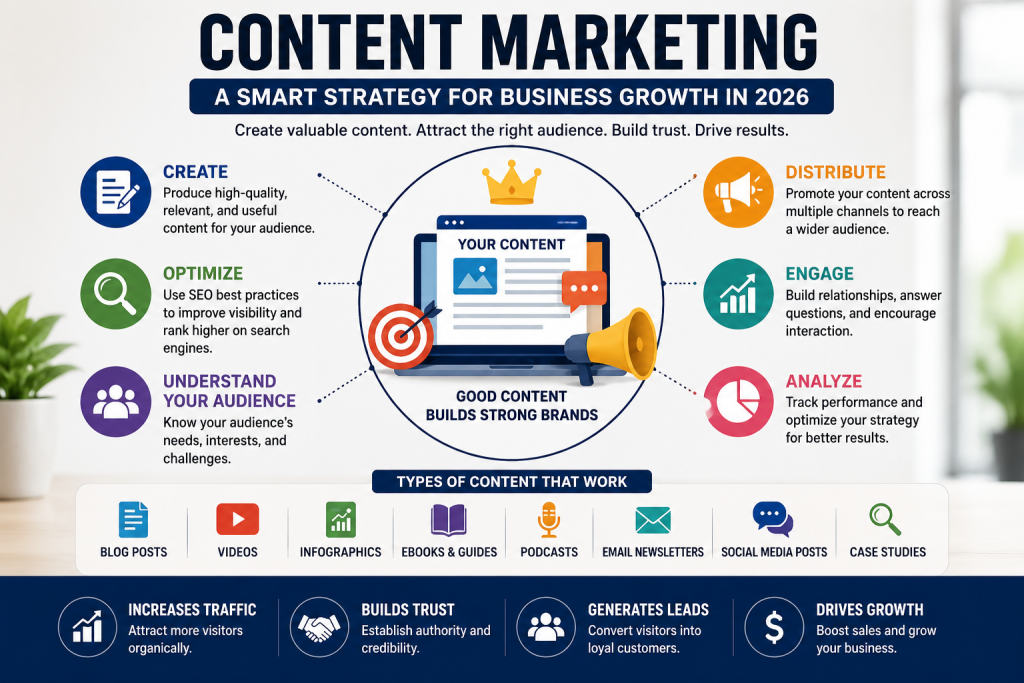
    Content marketing strategy infographic showing content creation, SEO optimization, audience engagement, content distribution, and business growth in 2026

    Content Marketing Trends for 2026

    As digital marketing evolves, Content Marketing continues to adapt to changing consumer expectations and search engine algorithms.

    A modern marketing strategy should include a mix of formats such as:

    • Blog articles
    • Videos
    • Case studies
    • Podcasts
    • Email newsletters
    • Interactive content
    • Industry reports

    Businesses that diversify content formats can reach broader audiences while increasing engagement across multiple channels. In 2026, brands that prioritize helpful, user-focused content are expected to achieve stronger organic growth.

    Measuring Content Marketing Success

    Tracking performance is essential for improving Content results over time. Businesses should regularly monitor key metrics to understand what content generates the greatest impact.

    Important metrics include:

    • Organic traffic
    • Keyword rankings
    • Click-through rates
    • Lead generation
    • Conversion rates
    • Time on page
    • Engagement metrics

    By evaluating these indicators, companies can identify opportunities for improvement and make data-driven decisions that support long-term growth.

    Common Mistakes to Avoid

    Many organizations invest in Marketing but fail to achieve desired results because they overlook critical fundamentals.

    Common mistakes include:

    • Publishing inconsistent content
    • Ignoring audience intent
    • Focusing only on promotional messaging
    • Neglecting SEO optimization
    • Failing to track performance
    • Producing low-quality content

    Avoiding these issues can improve effectiveness and increase return on investment.

    Conclusion

    Marketing remains a powerful growth engine for businesses across the United States. Companies that implement a strong content marketing strategy can attract qualified traffic, build authority, strengthen customer relationships, and generate sustainable results.

    As competition increases in 2026, businesses that focus on creating valuable, relevant, and user-focused content will be positioned for long-term success. Investing in Marketing today can help establish a stronger digital presence and create lasting competitive advantages for the future.

  • Instagram Marketing (2026): Complete Guide for US Businesses

    Instagram Marketing (2026): Complete Guide for US Businesses

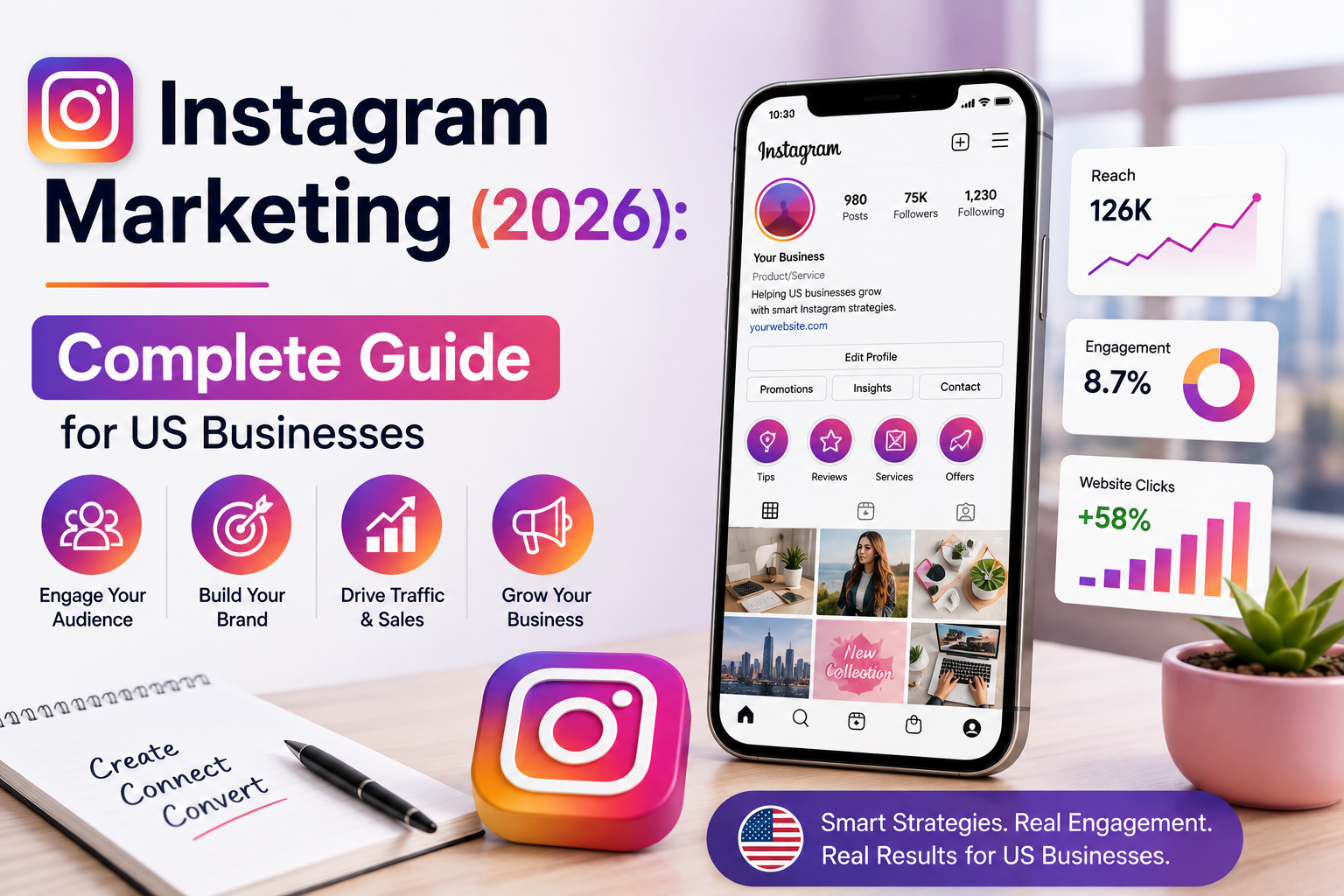
    Instagram Marketing Guide(2026):

    In today’s competitive digital landscape, Instagram Marketing has become one of the most effective ways for businesses to reach customers, build brand awareness, and increase sales. With millions of active users in the United States, Instagram continues to be a powerful platform for businesses of every size. This Instagram Marketing guide for 2026 explains how to build a successful presence, create engaging content, and generate measurable business results.

    Whether you’re a local business, online store, or service provider, mastering Instagram Marketing can help you connect with your target audience and stay ahead of the competition.

    What Is Instagram Marketing?

    Instagram Marketing is the process of using Instagram to promote products, services, or brands through organic content and paid advertising. A strong Instagram marketing strategy includes creating valuable posts, engaging with followers, running advertising campaigns, and analyzing performance to improve results.

    Businesses that consistently invest in Instagram Marketing often experience higher engagement, increased website traffic, and stronger customer relationships.
    Why Instagram Marketing Matters in 2026

    The importance of Instagram Marketing continues to grow because consumers increasingly discover brands through social media. Instagram offers advanced targeting, multiple content formats, and shopping features that make it easier for businesses to convert followers into customers.

    Key benefits include:

    • Increased brand visibility
    • Better customer engagement
    • High-quality lead generation
    • Strong visual storytelling
    • Cost-effective advertising
    • Improved customer trust

    A successful Instagram marketing strategy helps businesses maximize these opportunities while maintaining a consistent brand image.

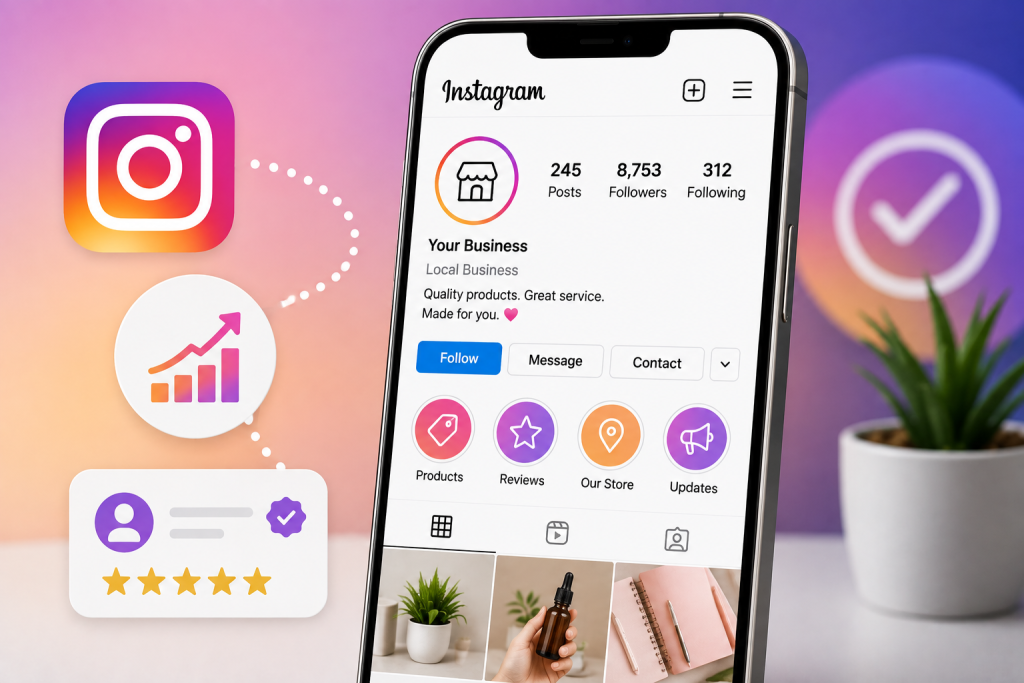
    Optimized Instagram business profile on a smartphone showing professional branding, bio, contact buttons, profile optimization, and business growth features.

    Optimize Your Instagram Business Profile

    A professional profile is the foundation of effective Instagram Marketing.

    Make sure your profile includes:

    • A recognizable profile picture
    • Keyword-rich business name
    • SEO-friendly bio
    • Website link
    • Contact information
    • Action buttons
    • Story Highlights

    An optimized profile makes your Instagram Marketing efforts more effective by encouraging profile visits and conversions.

    Create High-Quality Content

    Content is the heart of successful Instagram Marketing. Every post should provide value while encouraging users to engage with your brand.

    Popular content formats include:

    • Reels
    • Carousel posts
    • Stories
    • Live videos
    • Educational graphics
    • Customer testimonials
    • Behind-the-scenes content

    A consistent Instagram marketing strategy should balance promotional posts with educational and entertaining content.

    Use Reels to Increase Reach

    One of the fastest-growing parts of Instagram Marketing is Instagram Reels. Short-form videos receive excellent organic reach and help businesses connect with new audiences.

    Tips for better Reels:

    • Capture attention quickly
    • Add captions
    • Use trending audio
    • Include a call to action
    • Keep videos concise

    Adding Reels to your Instagram strategy can significantly improve visibility.

    Use Hashtags Strategically

    Hashtags remain an important element of Instagram because they improve content discoverability.

    Best practices:

    • Mix popular and niche hashtags
    • Use location-based hashtags
    • Include industry keywords
    • Avoid irrelevant tags
    • Test different hashtag groups

    A smart Instagram marketing strategy combines hashtags with SEO-friendly captions to maximize reach.

    Build an Engaged Community

    Effective Instagram is about more than posting content. Businesses should actively engage with their audience.

    Ways to increase engagement:

    • Reply to comments
    • Answer direct messages
    • Create polls and quizzes
    • Encourage user-generated content
    • Collaborate with creators
    • Host giveaways

    Community engagement strengthens your Instagram results over time.

    Invest in Instagram Ads

    Organic growth is valuable, but paid campaigns can accelerate Instagram success.

    Instagram Ads allow businesses to:

    • Reach targeted audiences
    • Increase website traffic
    • Generate leads
    • Drive online sales
    • Promote new products
    • Build brand awareness

    A well-planned Instagram strategy combines organic content with paid advertising for maximum impact.

    Track Performance Metrics

    No Instagram campaign is complete without performance analysis.

    Monitor metrics such as:

    • Reach
    • Impressions
    • Engagement rate
    • Website clicks
    • Profile visits
    • Follower growth
    • Conversion rate

    Reviewing these insights helps refine your Instagram strategy and improve future campaigns.

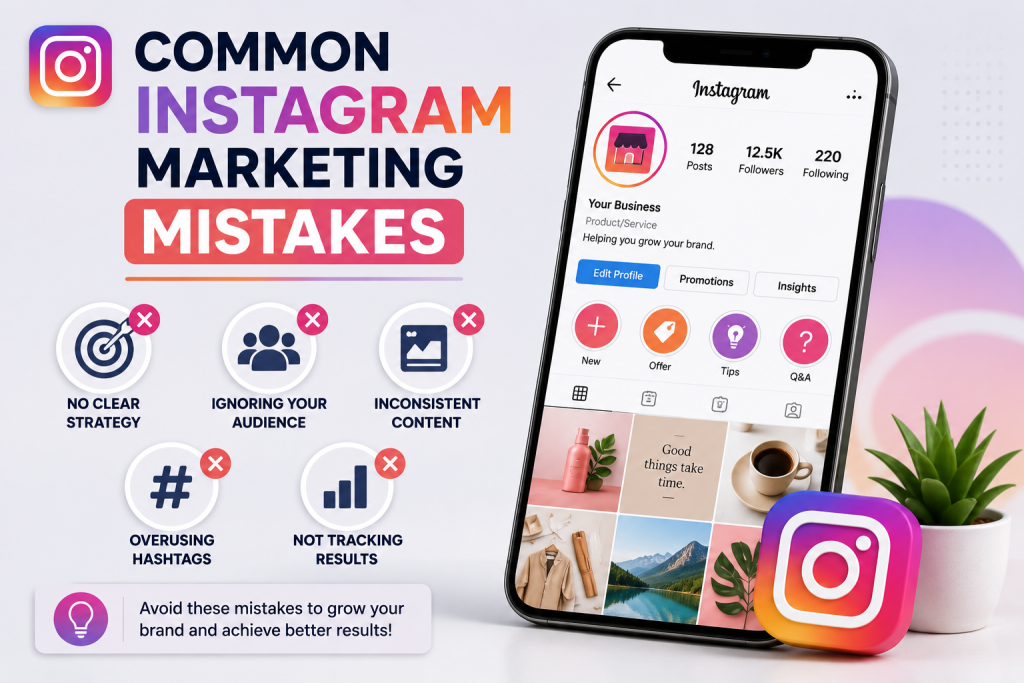
    Infographic highlighting common Instagram marketing mistakes, including inconsistent posting, poor targeting, excessive hashtags, lack of strategy, and ignoring analytics.

    Common Instagram Marketing Mistakes

    Avoid these common mistakes:

    • Posting inconsistently
    • Ignoring analytics
    • Using poor-quality visuals
    • Over-promoting products
    • Neglecting audience engagement
    • Using irrelevant hashtags
    • Failing to optimize your profile

    Eliminating these issues will strengthen your Instagram efforts.

    Best Practices for US Businesses

    To maximize Instagram Marketing results in the United States:

    • Post consistently.
    • Create mobile-friendly content.
    • Focus on storytelling.
    • Use local and industry-specific hashtags.
    • Invest in Reels.
    • Respond quickly to customer inquiries.
    • Test different content formats.
    • Continuously improve your Instagram strategy using analytics.

    Conclusion

    Instagram remains one of the most effective digital marketing strategies for businesses in 2026. By optimizing your profile, publishing valuable content, engaging with your audience, using Reels, and investing in targeted advertising, you can increase brand awareness, generate leads, and grow your business.

    A well-executed Instagram strategy ensures long-term success in today’s competitive social media landscape. Businesses that consistently adapt to new trends and analyze performance will be better positioned to achieve sustainable growth.


    Frequently Asked Questions (FAQs)

    1. What is Instagram Marketing?

    Instagram Marketing is the practice of promoting a business, products, or services on Instagram through organic content and paid advertising.

    2. Is Instagram still effective in 2026?

    Yes. Instagram remains one of the best ways for businesses to reach targeted audiences and increase engagement.

    3. How often should businesses post on Instagram?

    Most businesses benefit from posting 3–5 times per week while maintaining a consistent content schedule.

    4. Are Instagram Reels important?

    Yes. Reels often receive higher organic reach than standard posts and play a major role in modern Instagram.

    5. Can small businesses succeed with Instagram?

    Absolutely. With a strong Instagram strategy, consistent content, and audience engagement, small businesses can effectively compete and grow their customer base.

  • Affiliate Marketing Guide: How to Start in 2026

    Affiliate Marketing Guide: How to Start in 2026

    Affiliate Marketing Guide: How to Start and Make Money in 2026

    An Affiliate Marketing Guide can help beginners understand how to promote products or services online and earn commissions from successful referrals. Affiliate marketing has become a popular online business model because you can start with a website, blog, social media platform, email list, or other digital channel.

    For U.S. creators, bloggers, influencers, and small business owners, affiliate marketing can become a flexible way to diversify online income.

    What Is Affiliate Marketing?

    The first step in this Affiliate Marketing Guide is understanding how the business model works.

    Affiliate marketing is a performance-based marketing strategy. A business, known as the merchant or advertiser, gives affiliates a unique tracking link. The affiliate promotes a product or service, and when someone completes a qualifying action through that link, the affiliate can earn a commission.

    Depending on the program, commissions may be paid for sales, leads, app installations, subscriptions, or other approved actions.

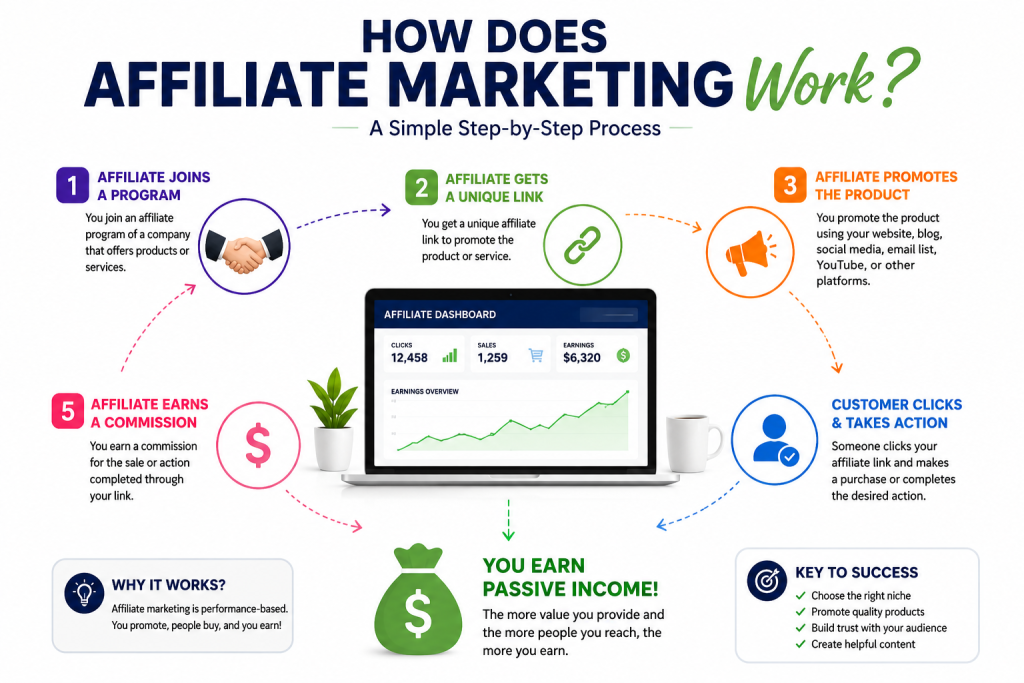
    How affiliate marketing works from affiliate link to customer purchase and commission

    How Does Affiliate Marketing Work?

    A successful Affiliate Marketing Guide should explain the basic process. Affiliate marketing typically involves four parties:

    1. Merchant: The company selling the product or service.
    2. Affiliate: The person or business promoting it.
    3. Consumer: The person who clicks the affiliate link and takes action.
    4. Affiliate network: A platform that may connect merchants with affiliates and track referrals.

    For example, a U.S. blogger could publish a product comparison, recommend a useful tool, and include an affiliate link. If a reader makes a qualifying purchase, the blogger may receive a commission.

    How to Start Affiliate Marketing

    This Affiliate Marketing Guide recommends starting with a specific niche rather than promoting everything.

    Choose a topic you understand and that has commercial potential. Popular affiliate marketing niches include:

    • Personal finance
    • Software and technology
    • Health and wellness
    • Home improvement
    • Travel
    • Fitness
    • Beauty
    • Education
    • Business services
    • Ecommerce

    After selecting a niche, research affiliate programs that offer products your audience genuinely needs.

    Build a Website or Content Platform

    An effective Affiliate Marketing Guide should not focus only on affiliate links. Your primary goal should be creating useful content.

    A website or blog gives you a long-term platform for publishing:

    • Product reviews
    • Comparison articles
    • Tutorials
    • Buying guides
    • How-to articles
    • Product roundups
    • Case studies

    Search engine optimization can help your content reach people who are actively looking for information before making a purchase.

    Choose Quality Affiliate Programs

    The next step in this Affiliate Marketing Guide is finding trustworthy affiliate programs.

    Look for programs with reputable companies, clear commission structures, reliable tracking, reasonable payment terms, and products that fit your audience.

    Do not choose an affiliate program solely because it offers a high commission. A low-quality product can damage your credibility and reduce audience trust.

    Create Helpful Content That Converts

    A major principle of this Affiliate Marketing Guide is to prioritize usefulness over aggressive selling.

    Instead of simply saying that a product is “the best,” explain who it is suitable for, its advantages, limitations, pricing considerations, and alternatives.

    For example, a software review can discuss features, ease of use, pricing, customer support, and ideal users. This gives readers enough information to make an informed decision.

    Use SEO to Attract U.S. Search Traffic

    SEO is an important part of any Affiliate Marketing Guide because organic search can provide consistent traffic over time.

    Research keywords related to your niche and create content around specific search intent. Use descriptive headings, optimized titles, useful internal links, original information, and clear explanations.

    For U.S. audiences, consider search terms, pricing, availability, and examples that are relevant to American consumers.

    Follow Affiliate Disclosure Requirements

    An important part of this Affiliate Marketing Guide is transparency.

    If you earn commissions from recommendations, clearly disclose your affiliate relationship. U.S. affiliate marketers should clearly disclose their affiliate relationships. See the FTC affiliate marketing disclosure guidelines for detailed guidance on where and how disclosures should appear.

    A disclosure should be easy for readers to notice and understand. Do not hide important information in a location where readers are unlikely to see it.

    Common Affiliate Marketing Mistakes

    Beginners following an Affiliate Marketing Guide often make several avoidable mistakes.

    Common problems include promoting too many unrelated products, choosing low-quality programs, copying competitors, publishing thin content, ignoring SEO, using misleading claims, and focusing entirely on commissions.

    Another mistake is expecting immediate income. Affiliate marketing usually requires consistent content creation, audience development, testing, and optimization.

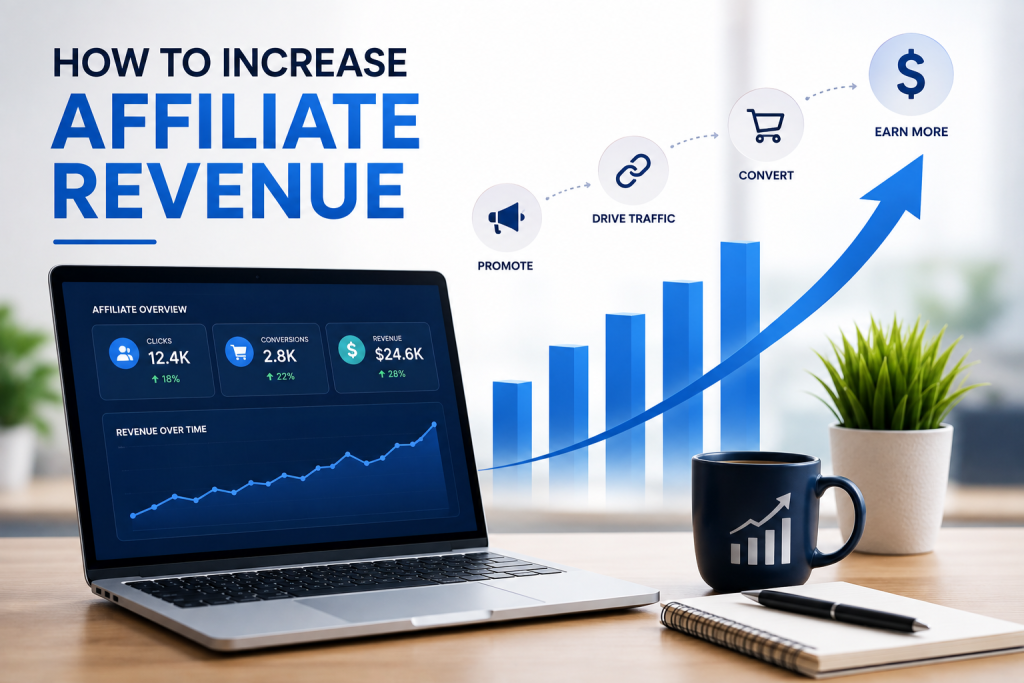
    Modern affiliate marketing illustration showing revenue growth, clicks, conversions, traffic, and performance analytics.

    How to Increase Affiliate Revenue

    The final stage of this Affiliate Marketing Guide is improving your results.

    Track which pages receive traffic, which links receive clicks, and which products generate conversions. Update old content when information changes and test different calls to action.

    You can also diversify your traffic through search engines, email newsletters, social media, YouTube, and other relevant channels.

    Most importantly, recommend products that genuinely solve problems for your audience.

    Final Thoughts

    This Affiliate Marketing Guide shows that successful affiliate marketing is built on trust, useful content, SEO, and consistent effort. In 2026, U.S. creators and businesses can use affiliate marketing to build an additional online revenue stream without creating their own products.

    Start with a focused niche, choose reputable programs, publish genuinely helpful content, disclose affiliate relationships, and continually measure your results. With the right strategy, affiliate marketing can become a sustainable part of a broader digital business.

  • Email Marketing Guide: How to Build a Winning Strategy in 2026

    Email Marketing Guide: How to Build a Winning Strategy in 2026

    Email Marketing Guide:

    An effective Email Marketing Guide helps U.S. businesses turn subscribers into customers, increase sales, and build lasting relationships. Email lets brands communicate directly with people who have already shown interest in their products or services.

    For U.S. small businesses, ecommerce stores, SaaS companies, agencies, and local businesses, email can support lead generation and customer retention.

    Why Email Marketing Matters in 2026

    In 2026, consumers receive countless digital messages, making relevance more important than volume. A strong Email Marketing Guide focuses on delivering useful content to the right audience at the right time.

    Email marketing can help businesses:

    • Generate website traffic and sales
    • Nurture leads through the buying journey
    • Promote products and services
    • Improve customer retention
    • Build brand awareness
    • Share educational content
    • Re-engage inactive subscribers

    Email gives businesses direct control over subscriber communication, making it an important part of a U.S. digital marketing strategy.

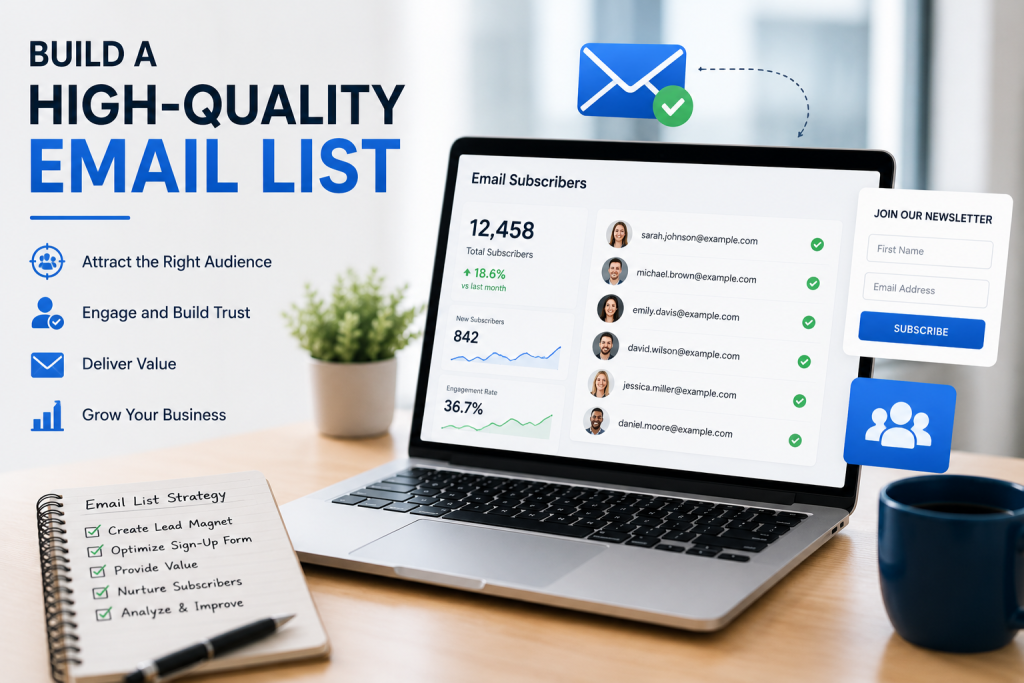
    Professional email marketing illustration showing subscriber growth, newsletter signup, audience engagement, lead generation, and email list building strategies.

    Build a High-Quality Email List

    The foundation of an effective Email Marketing Guide is a permission-based email list. Use this Email Marketing Guide to build campaigns around customer needs. Avoid purchasing email databases. Instead, encourage people to subscribe voluntarily.

    Useful list-building methods include:

    • Website signup forms
    • Free guides and downloadable resources
    • Coupons and special offers
    • Webinar registrations
    • Checkout opt-ins
    • Blog newsletter forms
    • Lead-generation landing pages

    Tell subscribers what they will receive and how often you will email them.

    Choose the Right Email Marketing Platform

    Your Email Marketing Guide should include selecting software that fits your business goals, audience size, and budget. Email platforms can provide automation, segmentation, templates, analytics, and subscriber management.

    Before choosing a platform, compare automation, deliverability, analytics, integrations, pricing, and customer support.

    A small U.S. business may need a simple newsletter tool, while a growing ecommerce brand may need advanced automation.

    Create Valuable Email Content

    A successful Email Marketing Guide is not about sending more emails. It is about sending better emails. Use clear subject lines, concise copy, and a strong call to action.

    Useful content includes product announcements, educational tips, promotions, company updates, customer stories, recommendations, and event invitations.

    Keep emails mobile-friendly because many subscribers read messages on smartphones.

    Use Segmentation and Personalization

    One of the most important principles in an Email Marketing Guide is audience segmentation. Sending identical messages to everyone can reduce engagement.

    Segment subscribers by:

    • Location
    • Purchase history
    • Website behavior
    • Interests
    • Customer type
    • Email engagement

    For example, a U.S. retailer can send different offers to first-time buyers, repeat customers, and inactive subscribers. Personalized messages can make campaigns more relevant and useful.

    Automate Your Email Campaigns

    Email automation is another key part of an Email Marketing Guide because it lets businesses communicate consistently without manually sending every message.

    Common automated campaigns include:

    • Welcome emails
    • Abandoned cart reminders
    • Lead-nurturing sequences
    • Post-purchase follow-ups
    • Review requests
    • Re-engagement campaigns

    Each automated email should have a clear purpose and match the customer journey.

    Follow U.S. Email Marketing Rules

    A responsible Email Marketing Guide should address compliance. This Email Marketing Guide also keeps compliance in the planning process. U.S. businesses should follow the CAN-SPAM Act requirements when sending commercial emails.

    Avoid deceptive subject lines, identify commercial messages appropriately, provide a valid physical postal address, and make it easy for recipients to opt out. Unsubscribe requests should be handled promptly.

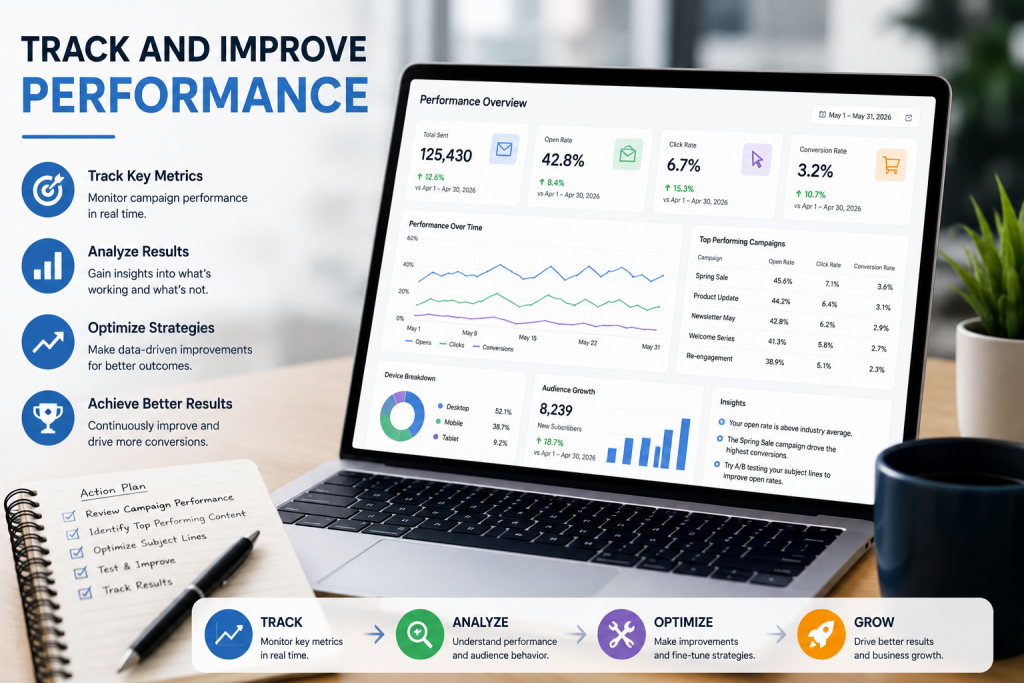
    Email marketing performance dashboard showing key metrics such as open rate, click rate, conversions, audience growth, campaign performance, and optimization insights.

    Track and Improve Performance

    The best Email Marketing Guide includes regular performance measurement. Track metrics such as open rate, click-through rate, conversion rate, unsubscribe rate, bounce rate, and revenue generated from campaigns.

    Test subject lines, offers, content, send times, and calls to action to discover what works best.

    Avoid Common Email Marketing Mistakes

    A practical Email Marketing Guide can help you avoid problems such as buying email lists, sending too frequently, misleading subject lines, poor mobile design, overly long emails, and inactive subscribers.

    Focus on permission, relevance, consistency, and value. A smaller list of engaged subscribers can be more valuable than a large list of uninterested contacts.

    Final Thoughts

    This Email Marketing Guide is built around one simple goal: provide useful information that encourages subscribers to take meaningful action. In 2026, U.S. businesses can use email to attract leads, nurture prospects, strengthen customer loyalty, and drive measurable revenue.

    Start with a permission-based list, create valuable content, segment your audience, automate communication, follow U.S. requirements, and measure results. Consistent testing can make email marketing a reliable long-term strategy.

  • Link Building Strategies: Best 2026 Guide to Earn Backlinks

    Link Building Strategies: Best 2026 Guide to Earn Backlinks

    Link Building Strategies: Complete Guide for Better SEO

    If you want your website to rank higher on Google in 2026, mastering Link Building Strategies is one of the smartest investments you can make. High-quality backlinks remain one of Google’s strongest ranking signals, helping websites build authority, improve trust, and attract more organic traffic.

    Whether you own a business website, blog, eCommerce store, or service-based company in the United States, using the right Link Building Strategies can significantly improve your online visibility without relying entirely on paid advertising.

    In this guide, you’ll learn proven, white-hat techniques that continue to deliver results while following Google’s best practices.


    Why Link Building Still Matters in 2026

    Google evaluates hundreds of ranking factors, but backlinks continue to play an important role. A backlink acts like a recommendation from another website. The more trustworthy websites that link to your content, the more credibility your website gains.

    Modern Link Building Strategies focus on earning links naturally instead of manipulating search engines. Quality always beats quantity.

    Benefits include:

    • Higher Google rankings
    • Increased website authority
    • More organic traffic
    • Better brand credibility
    • Faster indexing of new pages
    • More referral visitors

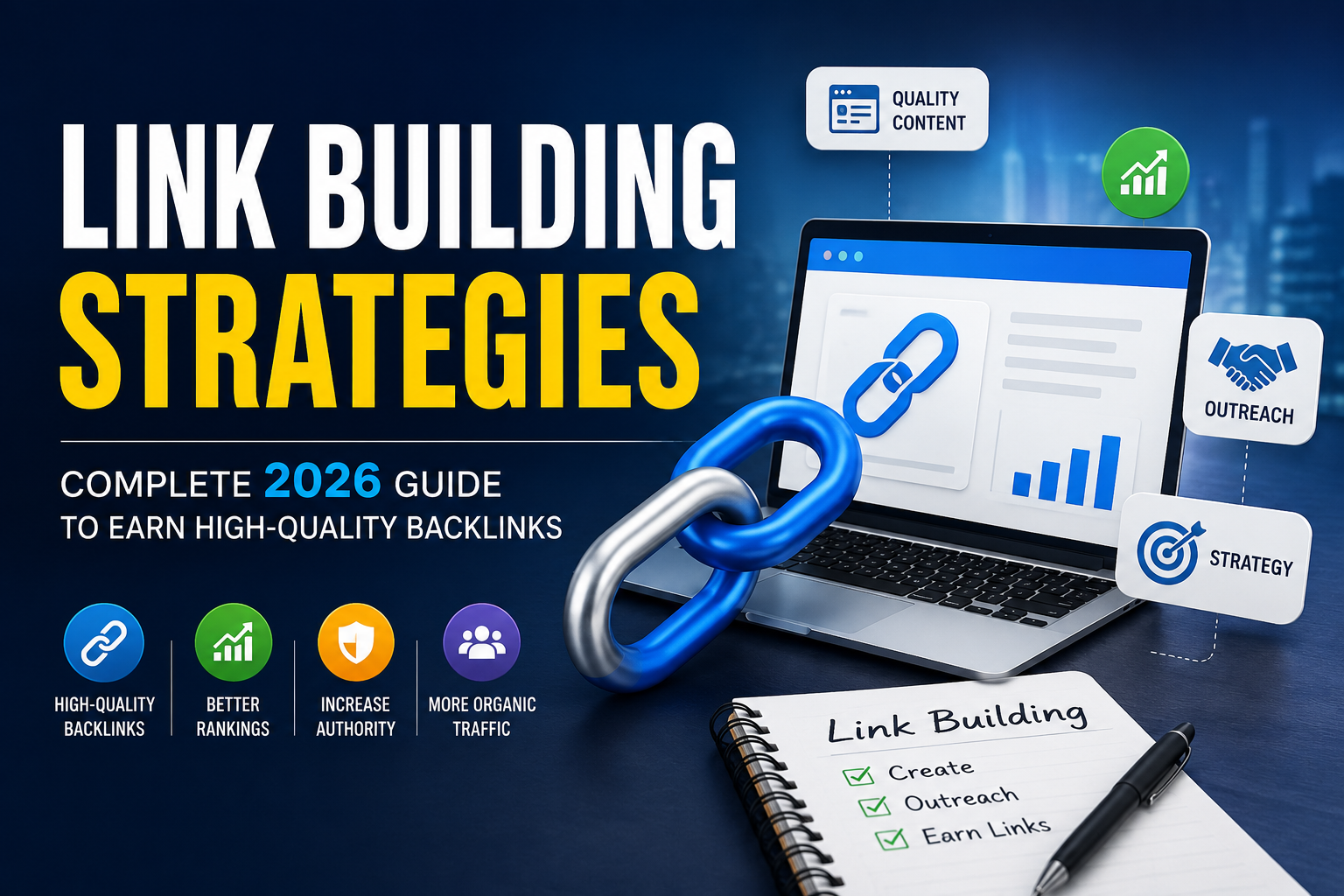
    Best Link Building Strategies for long-term SEO success with quality backlinks, content marketing, outreach, and website authority growth.

    Best Link Building Strategies for Long-Term SEO Success

    Here are the most effective Link Building Strategies that work for businesses targeting the U.S. market.

    1. Create High-Quality Content

    Exceptional content naturally attracts backlinks.

    Publish:

    • Complete guides
    • Original research
    • Industry statistics
    • Case studies
    • Helpful tutorials
    • Free tools
    • Infographics

    People link to content that solves real problems.


    2. Guest Posting on Authority Websites

    Guest blogging remains one of the safest and most effective Link Building Strategies when done correctly.

    Choose websites that:

    • Have real traffic
    • Are relevant to your industry
    • Publish original content
    • Maintain editorial standards

    Focus on providing value rather than simply getting a backlink.


    3. Build Resource Page Links

    Many universities, organizations, and businesses maintain helpful resource pages.

    Find pages related to your niche and recommend your useful content if it genuinely adds value.

    These backlinks often come from highly trusted websites.


    4. Broken Link Building

    Broken link building involves finding dead links on other websites and suggesting your relevant content as a replacement.

    This approach benefits both parties:

    • Website owners fix broken pages.
    • You earn quality backlinks.

    It’s one of the most effective white-hat Link Building Strategies available today.


    5. Digital PR Campaigns

    Digital PR has become increasingly valuable in 2026.

    Create newsworthy content such as:

    • Industry reports
    • Survey results
    • Company milestones
    • Trend analysis
    • Expert opinions

    Journalists and bloggers often reference valuable data sources with backlinks.


    6. Local Link Building

    For businesses serving U.S. customers, local SEO is essential.

    Earn backlinks from:

    • Local business directories
    • Chambers of commerce
    • Community organizations
    • Local newspapers
    • Business associations
    • Sponsorship opportunities

    Local links improve both authority and local search rankings.


    7. HARO and Expert Contributions

    Responding to journalist requests remains an excellent opportunity.

    When reporters quote your expertise, they often provide a backlink from high-authority news websites.

    Expert contributions help build both credibility and visibility.


    Common Link Building Mistakes to Avoid

    Avoid outdated SEO tactics that can hurt rankings.

    Never:

    • Buy backlinks
    • Participate in link farms
    • Use automated link software
    • Exchange excessive links
    • Create spammy directory links
    • Over-optimize anchor text

    Google continues to reward natural backlink profiles over artificial ones.


    Tools That Help with Link Building

    Several SEO tools simplify backlink research and outreach.

    Popular options include:

    • Ahrefs
    • Semrush
    • Moz Pro
    • Google Search Console
    • BuzzStream
    • Hunter.io
    • Pitchbox

    These platforms help identify backlink opportunities, monitor competitors, and manage outreach campaigns efficiently.


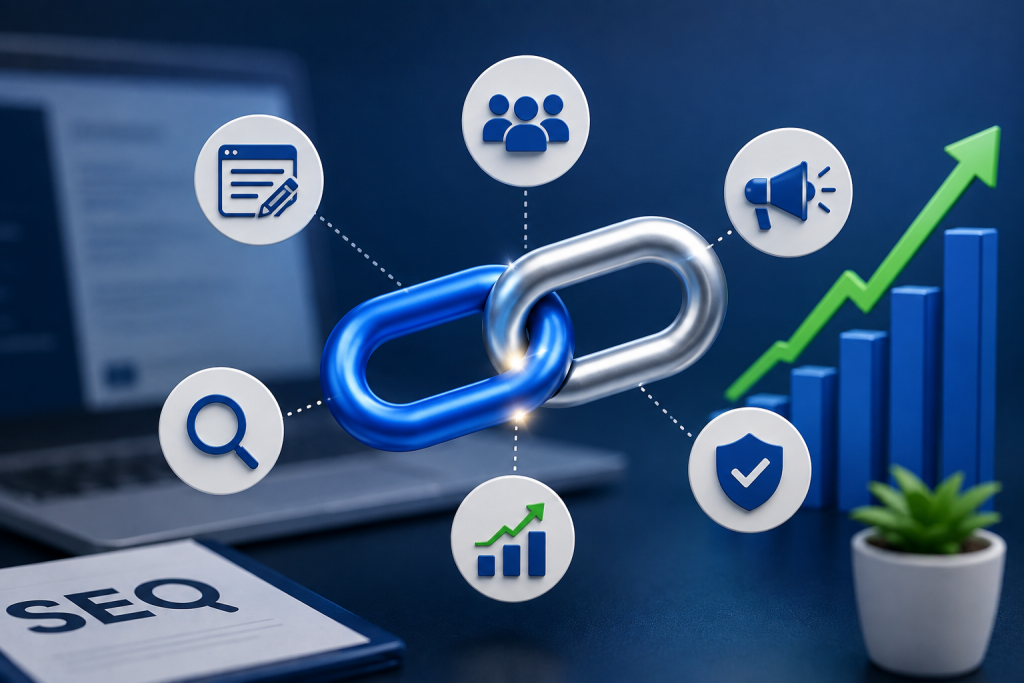
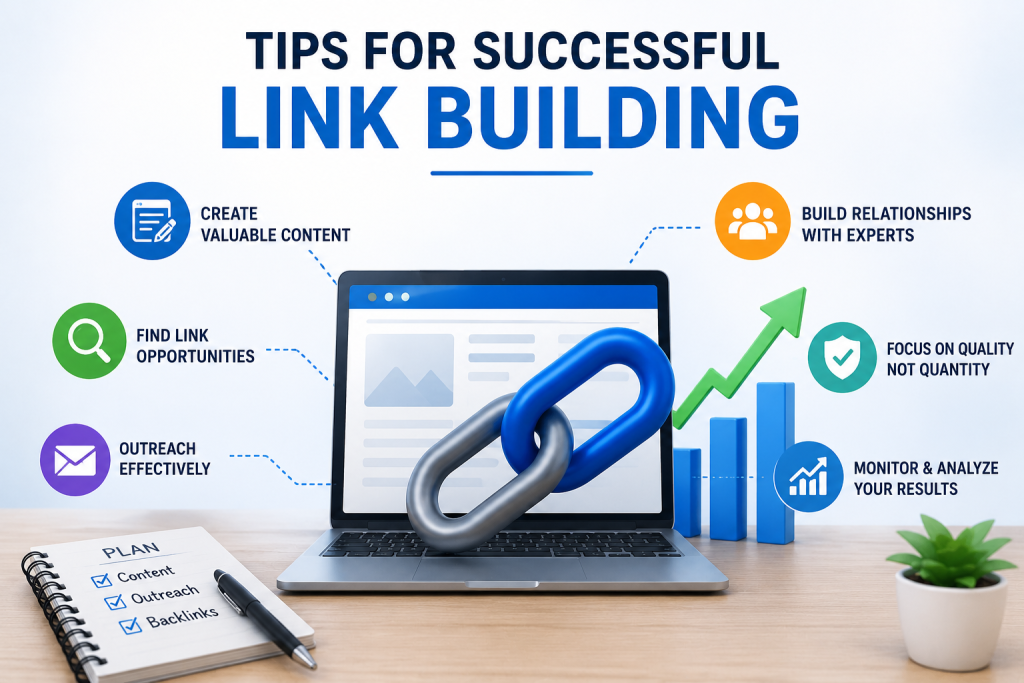
    Tips for Successful Link Building showing content creation, outreach, quality backlinks, SEO growth, and long-term website authority improvement.

    Tips for Successful Link Building

    Successful Link Building Strategies require patience and consistency.

    Follow these best practices:

    • Publish valuable content regularly.
    • Focus on quality instead of quantity.
    • Build relationships with industry websites.
    • Personalize outreach emails.
    • Monitor your backlink profile.
    • Remove harmful or spammy links.
    • Keep creating content worth referencing.

    SEO success comes from long-term authority rather than shortcuts.


    How Long Does Link Building Take?

    Many website owners expect immediate results, but SEO requires patience.

    Typically:

    • First backlinks: 2–8 weeks
    • Ranking improvements: 3–6 months
    • Significant authority growth: 6–12 months

    Consistent publishing and outreach produce the strongest long-term results.


    Conclusion

    In today’s competitive digital landscape, effective Link Building Strategies remain one of the most powerful ways to improve search rankings, increase authority, and attract qualified visitors. By focusing on quality content, ethical outreach, digital PR, guest posting, and local partnerships, businesses can build a strong backlink profile that supports sustainable growth. Start implementing these Link Building Strategies today, and you’ll position your website for greater SEO success throughout 2026 and beyond.


    Frequently Asked Questions (FAQs)

    What are link building strategies?

    Link building strategies are SEO techniques used to earn backlinks from other websites, helping improve search engine rankings and website authority.

    Are backlinks still important in 2026?

    Yes. High-quality backlinks remain one of Google’s most influential ranking factors when they come from relevant and trustworthy websites.

    What is the safest link building method?

    Creating valuable content that naturally earns backlinks, combined with guest posting and digital PR, is considered the safest approach.

    How many backlinks do I need?

    There is no fixed number. A few backlinks from authoritative websites are usually more valuable than hundreds of low-quality links.

    Can buying backlinks hurt SEO?

    Yes. Purchasing backlinks violates Google’s guidelines and may lead to ranking penalties or manual actions. Always focus on ethical, white-hat link building techniques.

  • Local SEO Guide: Complete 2026

    Local SEO Guide: Complete 2026

    Local SEO Guide: How to Rank Your Business in Google in 2026

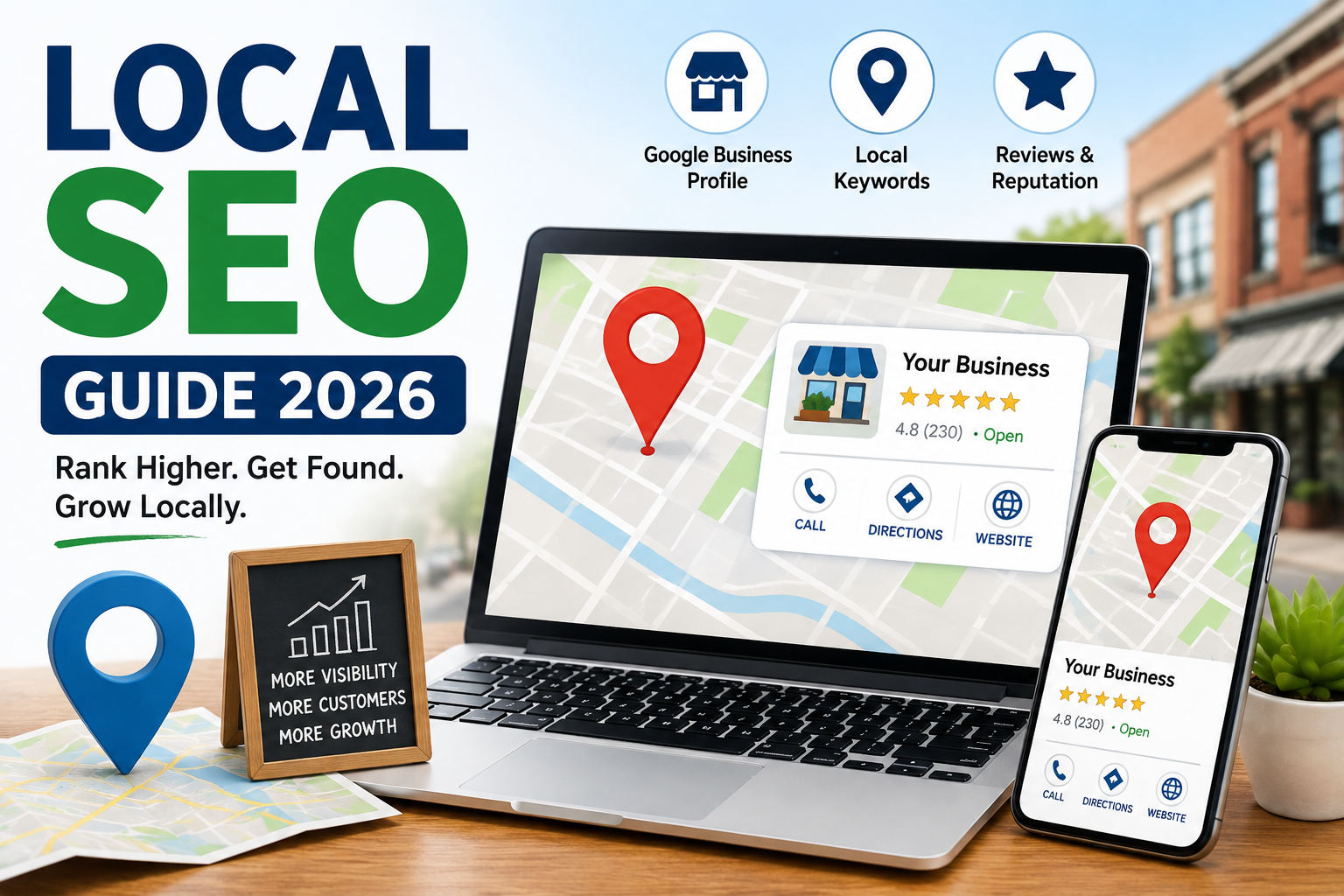
    If you own a business that serves customers in a specific city, town, or service area, local SEO Guide can help more people find your business when they search online. Whether you run a plumbing company in Texas, a dental office in Chicago, or a landscaping business in Florida, appearing in local search results can bring valuable traffic, leads, and customers.

    This Local SEO Guide explains the most important local search optimization strategies for U.S. businesses in 2026. You will learn how local SEO works, how to optimize your Google Business Profile, how to build local authority, and how to improve your website for location-based searches.

    What Is Local SEO?

    Local SEO is the process of optimizing your online presence so your business can appear for searches connected to a specific geographic location.

    For example, a customer might search for:

    • “plumber near me”
    • “best dentist in Chicago”
    • “tree removal Dallas TX”
    • “HVAC company near me”
    • “roofing contractor in Houston”

    Search engines use various signals to determine which local businesses are relevant to these searches.

    Why Is Local SEO Important in 2026?

    For many U.S. businesses, customers search online before calling, visiting, or purchasing from a local company.

    A strong local SEO Guide strategy can help your business:

    • Increase local visibility
    • Generate more website traffic
    • Attract nearby customers
    • Increase phone calls and inquiries
    • Improve online credibility
    • Compete with other local businesses
    • Generate more qualified leads

    For service-area businesses, local search visibility can be particularly valuable because people often search for services when they have an immediate need.

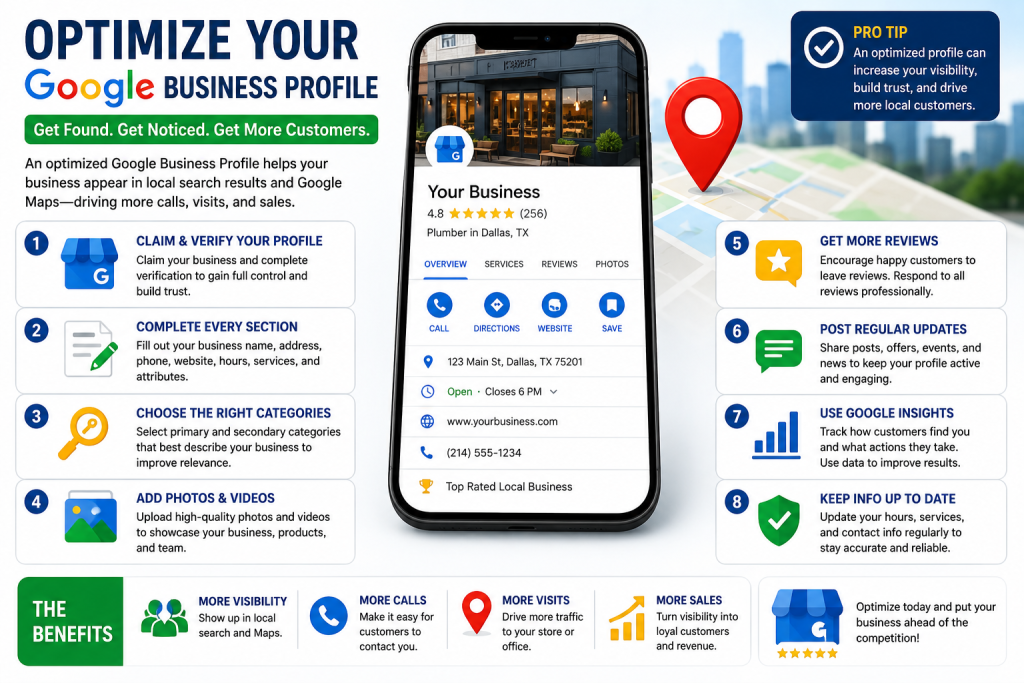
    Optimize Google Business Profile with local SEO tips, reviews, business information, photos, and Google Insights

    Optimize Your Google Business Profile

    One of the most important steps in this Local SEO Guide is optimizing your Google Business Profile.

    Your profile should contain accurate and complete information, including:

    • Business name
    • Primary business category
    • Phone number
    • Website
    • Business hours
    • Service areas
    • Business description
    • Photos
    • Services

    Keep your information accurate and update your profile when something changes.

    Use Local Keywords on Your Website

    Keyword research is another important part of local SEO Guide.

    Instead of targeting only broad keywords such as “tree service,” a Dallas tree company could target phrases such as:

    • “tree service Dallas”
    • “tree removal Dallas TX”
    • “emergency tree removal Dallas”
    • “tree trimming in Dallas”

    Use location keywords naturally in relevant page titles, headings, content, URLs, and image alt text.

    Create Location-Specific Content

    Creating useful local content can help local SEO Guide your website become more relevant to your target market.

    For example, a landscaping company could publish articles such as:

    • Best Landscaping Plants for Texas Homes
    • How Often Should You Trim Trees in Dallas?
    • Common Lawn Problems in Florida
    • How Much Does Tree Removal Cost in Houston?

    Build Local Citations

    Local citations are online mentions of your business local SEO Guide that generally include information such as its name, address, and phone number.

    Examples can include relevant business directories, industry websites, local organizations, and other reputable platforms.

    Do not create hundreds of low-quality directory listings simply to gain links. Focus on trustworthy and relevant sources.

    Get Genuine Customer Reviews

    Customer reviews can play an important role in your local online presence.

    Encourage satisfied customers to leave honest reviews about their actual experience. Make it easy for customers to find your review profile after completing a service.

    Never buy fake reviews or create reviews for local SEO Guide your own business. Authentic customer feedback is much more valuable for long-term reputation building.

    Earn Local Backlinks

    Backlinks are links from other websites to your website.

    For local businesses, relevant links from local newspapers, community organizations, industry associations, chambers of commerce, local publications, and online authority.

    The goal should be quality and relevance, for local SEO Guide not simply collecting as many links as possible.

    Make Your Website Mobile-Friendly

    Many local searches happen on smartphones. Your website should therefore work properly on mobile devices.

    Make sure visitors can quickly:

    • Find your phone number
    • Request a quote
    • Find your address
    • View your services
    • Read important information
    • Navigate between pages

    A fast, easy-to-use website creates a better experience for local SEO Guide potential customers and supports your overall SEO strategy.

    Track Your Local SEO Performance

    SEO should be measured over time. Monitor important metrics such as organic traffic, search visibility, website leads, phone calls, direction requests, and conversions.

    Tools such as Google Search Console and Google Analytics can help you understand how visitors find and interact with your website.

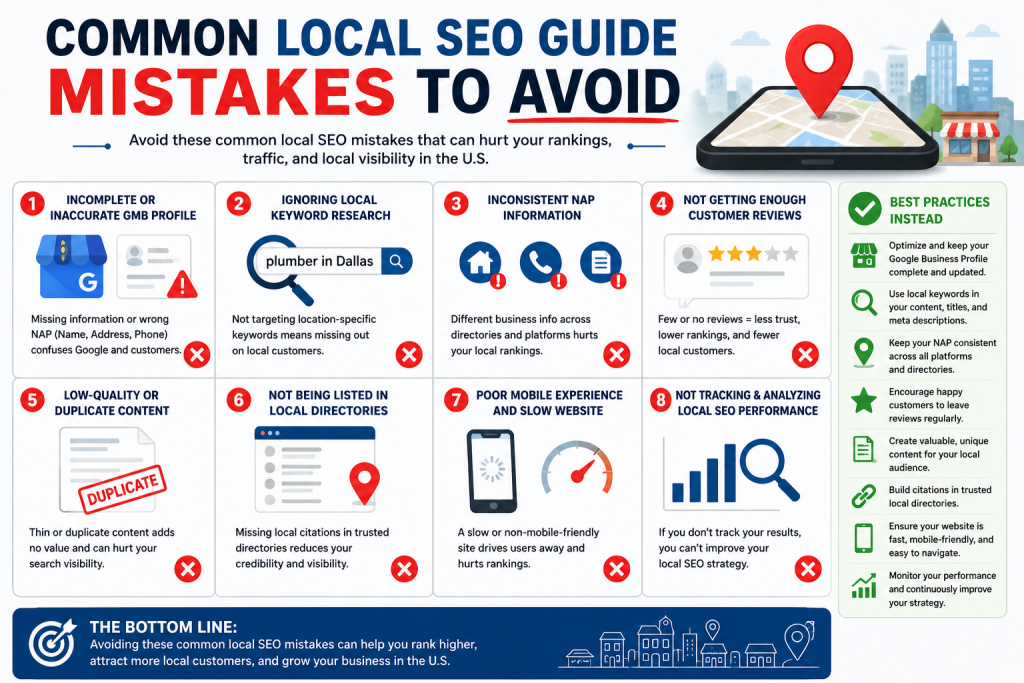
    Infographic highlighting common local SEO mistakes that can hurt U.S. business rankings, traffic, and local visibility, along with best practices for improving local search performance.

    Common Local SEO Guide Mistakes to Avoid

    Beginners often make these mistakes:

    • Using incorrect business information
    • Keyword stuffing city names
    • Buying fake reviews
    • Creating low-quality location pages
    • Ignoring mobile users
    • Building spammy backlinks
    • Neglecting their Google Business Profile
    • Expecting instant SEO results

    Local SEO is a long-term process. Consistency, relevance, useful content, and a strong customer experience are more sustainable than shortcuts.

    Final Thoughts

    This Local SEO Guide provides a practical starting point for U.S. businesses that want to improve their visibility in local search results in 2026.

    Start by optimizing your Google Business Profile, improving your website, targeting relevant local keywords, creating useful location-based content, earning genuine reviews, and building relationships with reputable local websites.

    The goal isn’t simply to rank higher. The goal is to help nearby customers discover your business when they are ready to take action.

    FAQs About Local SEO

    What is local SEO?

    Local SEO is the process of optimizing a business’s online presence to improve visibility for searches related to a specific geographic location.

    How long does local SEO take to work?

    Results vary based on competition, website authority, location, industry, and the quality of your SEO strategy. New businesses may need several months of consistent work to build meaningful visibility.

    Is local SEO important for small businesses?

    Yes. Local SEO can be especially valuable for small businesses that depend on customers within a particular city, region, or service area.

    Does Google Business Profile help with local SEO?

    A complete and accurate Google Business Profile is an important part of a local search strategy, particularly for businesses that interact with customers locally.

  • Complete Digital Marketing Guide (2026):  Best Practices for Success

    Complete Digital Marketing Guide (2026): Best Practices for Success

    Complete Digital Marketing Guide (2026)

    In today’s competitive online marketplace, having a Complete Digital Marketing Guide is essential for businesses that want to increase visibility, generate qualified leads, and boost revenue. Whether you’re a startup, small business, or established company in the United States, understanding digital marketing can help you stay ahead of your competitors.

    This Complete Digital Marketing Guide explains the most effective digital marketing strategies, channels, tools, and best practices that businesses should follow in 2026.


    What Is Digital Marketing?

    Digital marketing is the promotion of products or services through online channels such as search engines, websites, email, social media platforms, and paid advertising.

    Unlike traditional marketing, digital marketing allows businesses to:

    • Reach targeted audiences
    • Measure campaign performance
    • Improve return on investment (ROI)
    • Generate quality leads
    • Increase online sales

    A well-planned Complete Digital Marketing Guide helps businesses understand how these channels work together.


    Why Digital Marketing Matters in 2026

    Businesses across the US continue investing heavily in digital marketing because consumers spend more time online than ever before.

    Major benefits include:

    • Increased brand awareness
    • Better customer engagement
    • Higher website traffic
    • Cost-effective advertising
    • Improved customer retention
    • Measurable campaign performance

    Companies that follow a structured Complete Digital Marketing Guide are more likely to outperform competitors in today’s digital landscape.


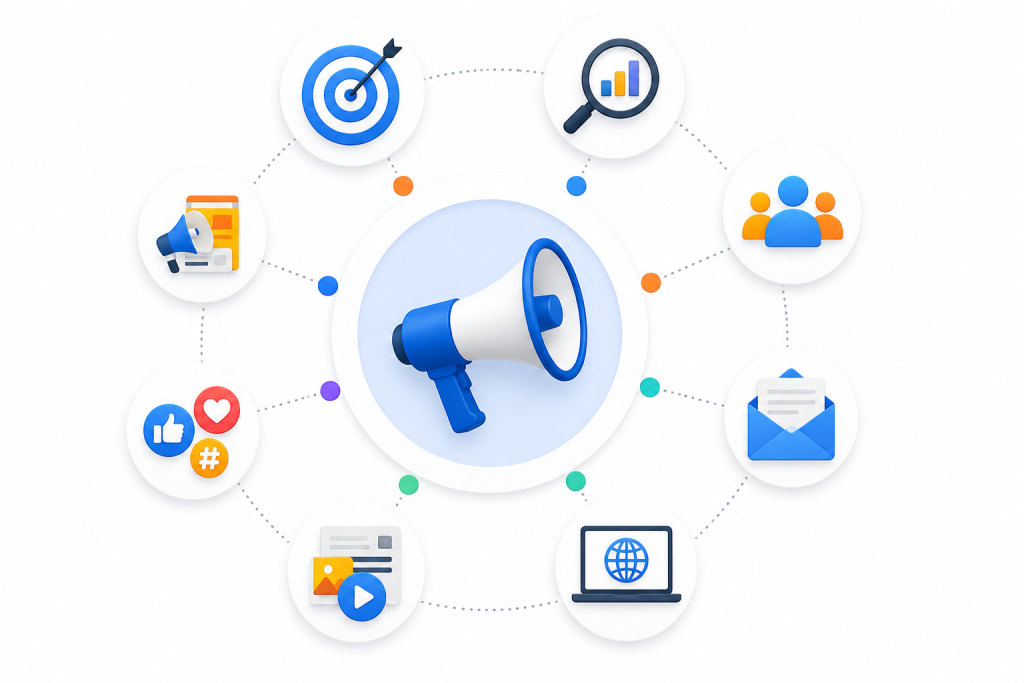
    A clean digital marketing infographic featuring visual icons representing essential components such as SEO, analytics, audience targeting, social media, email marketing, content marketing, advertising, and website strategy.

    Core Components of a Complete Digital Marketing Guide

    1. Search Engine Optimization (SEO)

    SEO helps websites rank higher on Google and other search engines.

    Important SEO practices include:

    • Keyword research
    • On-page optimization
    • Technical SEO
    • Internal linking
    • Quality backlinks
    • Mobile optimization
    • Fast website speed

    Good SEO creates long-term organic traffic without paying for every visitor.


    2. Content Marketing

    Content remains one of the strongest digital marketing strategies.

    Popular content types include:

    • Blog posts
    • Buying guides
    • Tutorials
    • Videos
    • Infographics
    • Case studies
    • FAQs

    Helpful, informative content builds trust while improving search engine rankings.


    3. Pay-Per-Click (PPC) Advertising

    PPC advertising allows businesses to appear instantly in search results.

    Popular PPC platforms include:

    • Google Ads
    • Microsoft Ads
    • YouTube Ads
    • Display Networks

    Benefits include:

    • Immediate traffic
    • Fast lead generation
    • Audience targeting
    • Budget control
    • Performance tracking

    4. Social Media Marketing

    Social media platforms help brands build communities and engage customers.

    Popular platforms for US businesses include:

    • Facebook
    • Instagram
    • LinkedIn
    • X
    • TikTok
    • Pinterest

    Consistent posting, audience engagement, and quality visuals improve brand recognition.


    5. Email Marketing

    Email marketing continues to deliver one of the highest returns on investment.

    Effective email campaigns include:

    • Welcome emails
    • Newsletters
    • Promotional campaigns
    • Product recommendations
    • Customer follow-ups

    Personalized emails often achieve better open and conversion rates.


    6. Local SEO

    Local SEO is especially valuable for businesses serving specific cities or regions.

    Best practices include:

    • Optimizing your Google Business Profile
    • Collecting customer reviews
    • Using location-based keywords
    • Building local citations
    • Creating city-specific landing pages

    Local SEO helps businesses attract nearby customers searching for services.


    Best Digital Marketing Strategies for US Businesses

    A successful strategy combines multiple channels instead of relying on just one.

    Some proven methods include:

    • Publishing helpful blog content weekly
    • Optimizing every webpage for SEO
    • Running targeted Google Ads campaigns
    • Posting regularly on social media
    • Building an email subscriber list
    • Tracking campaign performance with analytics
    • Updating old content regularly

    Following this Complete Digital Marketing Guide creates sustainable business growth over time.


    Essential Digital Marketing Tools

    Many marketers rely on professional tools to improve efficiency.

    Popular options include:

    • Google Analytics
    • Google Search Console
    • Google Ads
    • SEMrush
    • Ahrefs
    • Canva
    • Mailchimp
    • HubSpot

    These platforms help monitor traffic, optimize campaigns, and improve marketing performance.


    Common Digital Marketing Mistakes to Avoid

    Many businesses struggle because they make avoidable mistakes.

    Common errors include:

    • Ignoring SEO
    • Publishing low-quality content
    • Not tracking analytics
    • Targeting the wrong audience
    • Slow website performance
    • Poor mobile experience
    • Inconsistent branding
    • Neglecting email marketing

    Avoiding these mistakes increases long-term marketing success.


    Digital Marketing Trends for 2026

    The digital landscape continues evolving rapidly.

    Key trends include:

    • AI-powered content creation
    • Voice search optimization
    • Short-form video marketing
    • Personalized customer experiences
    • Marketing automation
    • Privacy-focused advertising
    • First-party data strategies
    • Interactive content

    Businesses that adapt to these trends will remain competitive.


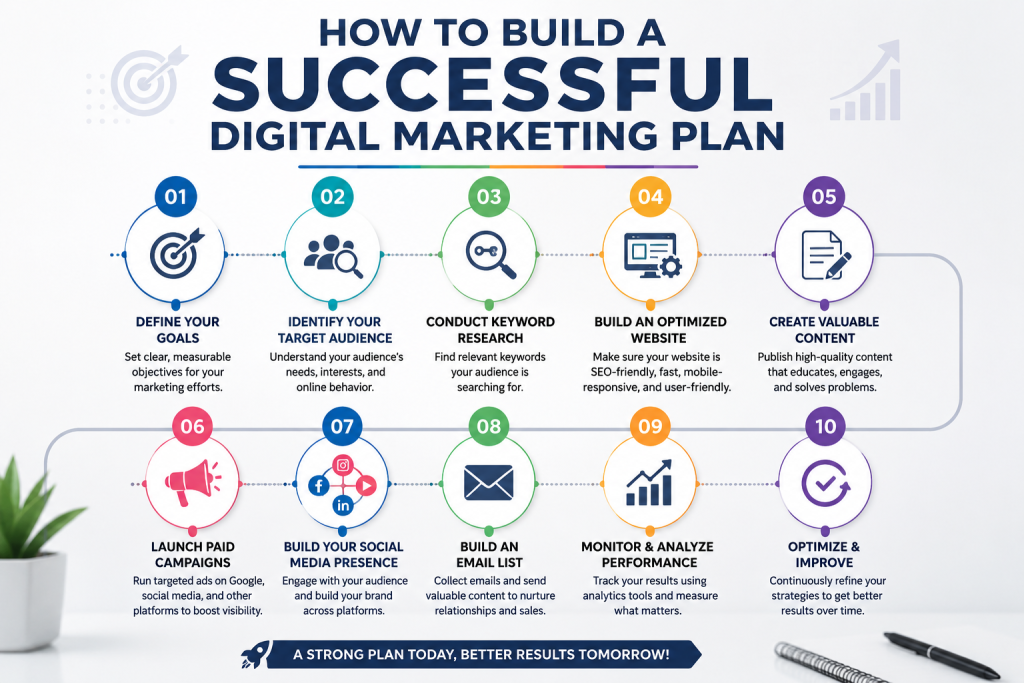
    How to Build a Successful Digital Marketing Plan in 2026 infographic showing goal setting, audience research, SEO, content marketing, PPC, social media, email marketing, analytics, and optimization for US businesses.

    How to Build a Successful Digital Marketing Plan

    A practical marketing plan should include:

    1. Define business goals.
    2. Identify your target audience.
    3. Conduct keyword research.
    4. Build an SEO-friendly website.
    5. Create valuable content.
    6. Launch paid advertising campaigns.
    7. Grow your social media presence.
    8. Build an email list.
    9. Monitor analytics.
    10. Continuously optimize campaigns.

    This structured approach makes the Complete Digital Marketing Guide easier to implement.


    Conclusion

    A Complete Digital Marketing Guide provides businesses with the knowledge needed to grow online, attract more customers, and increase revenue. By combining SEO, content marketing, PPC, social media, email marketing, and analytics, companies can create a strong online presence and stay competitive in 2026.

    Whether you’re launching a new business or expanding an existing one in the United States, investing in digital marketing is one of the smartest long-term growth strategies.


    Frequently Asked Questions (FAQs)

    What is the Complete Digital Marketing Guide?

    A Complete Digital Marketing Guide is a comprehensive resource that explains SEO, content marketing, PPC, social media, email marketing, and other online marketing strategies to help businesses grow.

    Why is digital marketing important in 2026?

    Digital marketing helps businesses reach more customers online, improve brand visibility, generate qualified leads, and increase sales using measurable marketing strategies.

    Which digital marketing strategy works best?

    The most effective approach combines SEO, quality content, paid advertising, email marketing, and social media to create consistent traffic and conversions.

    How long does SEO take to show results?

    Most SEO campaigns begin showing noticeable improvements within 3 to 6 months, depending on competition, website quality, and content strategy.

    Is digital marketing suitable for small businesses?

    Yes. Digital marketing allows small businesses to compete with larger companies by targeting specific audiences and managing advertising budgets efficiently.