Tag: DigitalMarketing

  • Marketing Automation: The Complete Guide for U.S. Businesses in 2026

    Marketing Automation: The Complete Guide for U.S. Businesses in 2026

    What Is Marketing Automation?

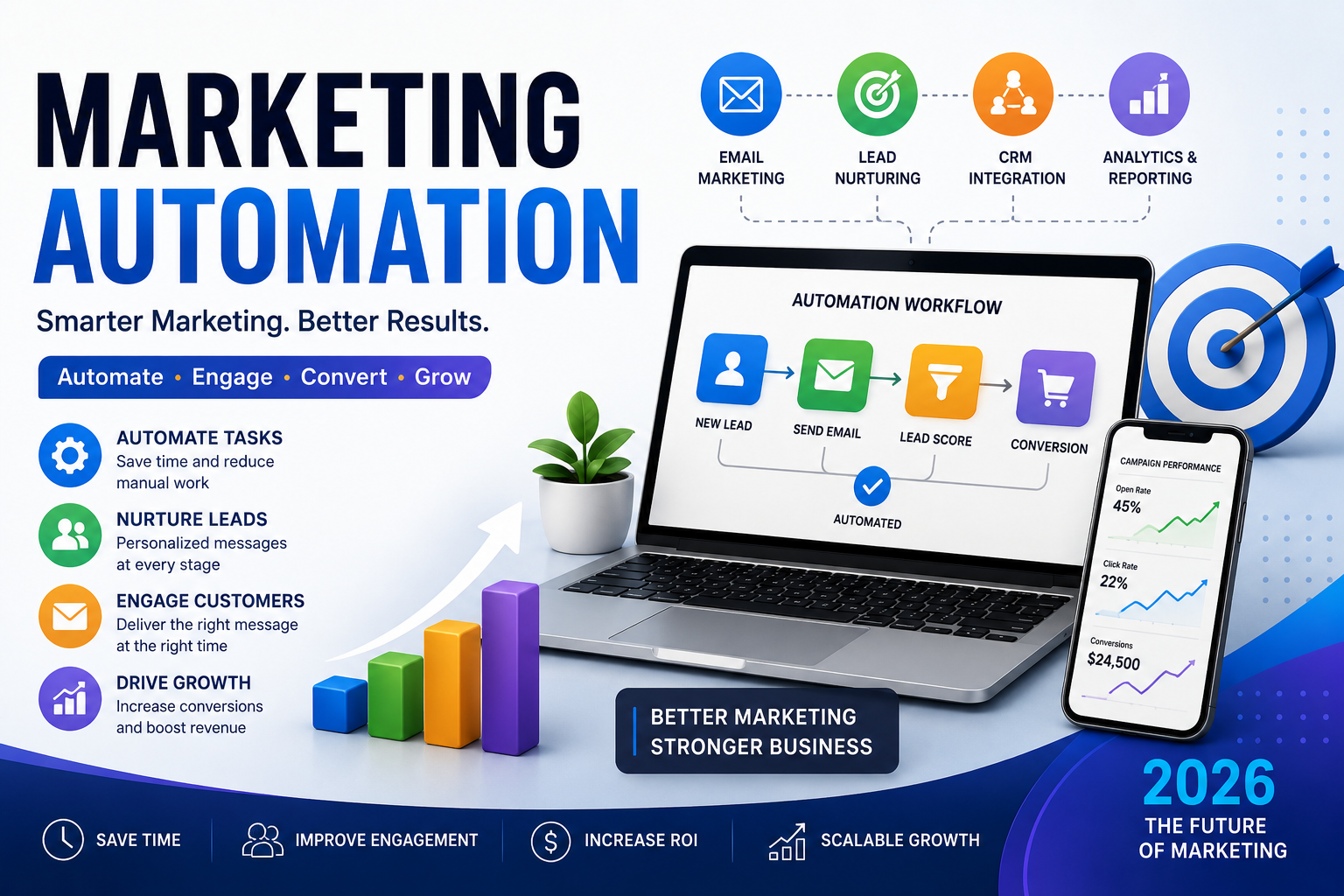
    Marketing automation is the use of software and technology to automate repetitive marketing tasks, manage customer interactions, and deliver personalized messages based on customer behavior.

    Instead of manually sending every email, following up with every lead, or posting every marketing message, businesses can create automated workflows that perform these tasks at the right time.

    For U.S. businesses, marketing automation can be especially useful for generating leads, nurturing prospects, improving customer relationships, and increasing marketing efficiency.

    Marketing automation uses software to automate repetitive marketing tasks, nurture leads, and deliver personalized customer experiences. HubSpot’s marketing automation resources provide additional information about automated workflows and campaigns.

    How Does Marketing Automation Work?

    Marketing works by connecting customer data with predefined workflows. When a customer performs a specific action, the system can automatically respond.

    For example, imagine someone visits a U.S. e-commerce website and signs up for a newsletter. A marketing automation system could automatically:

    1. Send a welcome email.
    2. Recommend relevant products.
    3. Send a follow-up message after several days.
    4. Offer a discount based on customer behavior.
    5. Notify the sales team when the customer becomes highly engaged.

    This allows businesses to communicate with potential customers without manually managing every interaction.
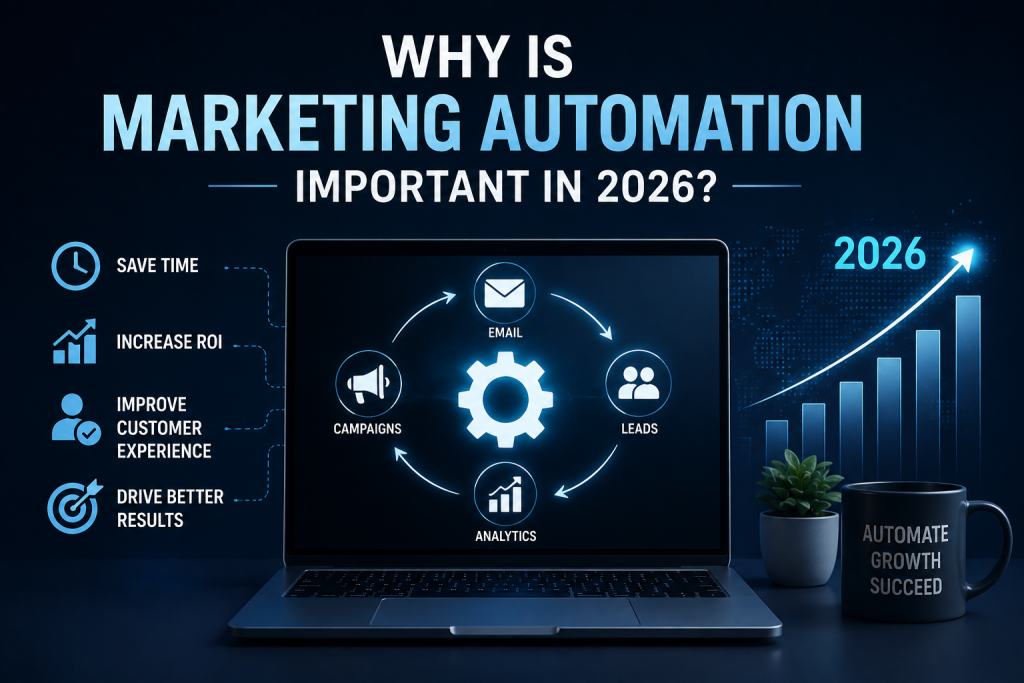
    Why marketing automation is important in 2026

    Why Is Marketing Automation Important in 2026?

    Competition in the U.S. market continues to increase, making efficient and personalized marketing more important than ever.

    Marketing helps businesses manage larger audiences while maintaining consistent communication. It can also help marketing teams spend more time on strategy, creativity, and customer relationships instead of repetitive administrative work.

    Some major benefits include:

    • Saving time and reducing repetitive tasks
    • Improving lead nurturing
    • Increasing marketing efficiency
    • Delivering personalized customer experiences
    • Improving lead conversion rates
    • Maintaining consistent communication
    • Supporting sales and marketing teams
    • Tracking customer interactions more effectively

    Common Marketing Automation Examples

    Marketing automation can be used across different stages of the customer journey.

    Email Marketing Automation

    Businesses can automatically send welcome emails, abandoned-cart reminders, educational content, product recommendations, and follow-up messages.

    For example, a U.S. SaaS company could create an automated email sequence for users who sign up for a free trial.

    Lead Nurturing

    Not every visitor is ready to purchase immediately. Automated lead-nurturing campaigns can provide useful content and follow-ups until a prospect becomes more interested.

    Customer Onboarding

    After a customer purchases a product or service, automated messages can explain how to get started, provide helpful resources, and encourage customers to use additional features.

    Abandoned Cart Recovery

    E-commerce businesses can automatically remind customers about products they left in their shopping carts. This can help recover potential sales without requiring manual follow-up.

    Customer Re-Engagement

    Businesses can also create campaigns for customers who have stopped opening emails, visiting websites, or purchasing products.

    How to Create a Marketing Automation Strategy

    A successful marketing automation strategy starts with clear goals. Before selecting software, determine what you want automation to accomplish.

    1. Define Your Goals

    Your goal might be generating more leads, increasing sales, improving customer retention, or reducing manual marketing tasks.

    2. Understand Your Audience

    Identify your target customers, their needs, interests, and behavior. For U.S. businesses, consider factors such as location, industry, customer demographics, and purchasing behavior when appropriate.

    3. Map the Customer Journey

    Understand how people move from discovering your business to becoming customers. This helps you identify where automation can provide the most value.

    4. Create Useful Content

    Automation works best when the content being delivered is genuinely helpful. Create emails, guides, offers, and educational resources that match each stage of the customer journey.

    5. Test and Improve

    Monitor campaign performance and continuously test subject lines, offers, messaging, timing, and calls to action.
    Best Marketing Automation Tools for businesses

    Best Marketing Automation Tools

    Businesses can choose from many marketing automation tools, depending on their size, budget, and marketing goals.

    Popular categories include:

    • Email marketing platforms
    • CRM and customer management systems
    • Lead-generation platforms
    • E-commerce automation software
    • Social media automation tools
    • Customer engagement platforms
    • Analytics and reporting solutions

    When choosing marketing automation software, consider ease of use, integrations, scalability, reporting features, personalization capabilities, and pricing.

    Marketing Automation Best Practices for 2026

    To get better results from automated marketing, follow these best practices:

    • Personalize messages whenever useful.
    • Avoid sending excessive emails.
    • Segment your audience.
    • Use clear calls to action.
    • Keep customer data organized.
    • Test automated workflows regularly.
    • Monitor conversion and engagement metrics.
    • Make it easy for customers to unsubscribe.
    • Combine automation with human support when necessary.

    Automation should improve the customer experience rather than make communication feel robotic.

    Final Thoughts

    Marketing automation can help U.S. businesses save time, nurture leads, personalize customer communication, and create more efficient marketing campaigns.

    In 2026, successful automation is not simply about sending more messages. It is about sending the right message to the right person at the right time.

    Start with one clear goal, build a simple workflow, measure the results, and gradually expand your automation strategy. With the right approach, marketing automation can become an important part of a scalable digital marketing strategy.

    Frequently Asked Questions

    What is marketing automation?

    Marketing uses software to automate repetitive marketing activities such as email campaigns, lead nurturing, customer follow-ups, and personalized communications.

    What are the benefits of marketing automation?

    The main benefits include saving time, improving lead nurturing, increasing efficiency, personalizing communication, and helping businesses manage larger audiences.

    Is marketing automation useful for small businesses?

    Yes. Small businesses can use automation to handle repetitive marketing tasks, follow up with leads, communicate with customers, and maintain consistent campaigns without requiring a large marketing team.

    Is marketing automation worth it in 2026?

    Yes. For businesses that have recurring marketing tasks and a growing customer base, automation can improve efficiency while allowing marketing teams to focus more on strategy and customer experience.
  • YouTube SEO: The Complete Guide to Ranking Videos in 2026

    YouTube SEO: The Complete Guide to Ranking Videos in 2026

    What Is YouTube SEO?

    YouTube SEO is the process of optimizing your videos, channel, and content so YouTube can better understand your videos and recommend them to the right viewers. A strong YouTube SEO strategy can help your videos appear in YouTube search results, suggested videos, and other discovery areas.

    For U.S. creators, businesses, marketers, and brands, YouTube SEO is especially valuable because it can help reach a large English-speaking audience searching for products, services, information, entertainment, and solutions.

    Why Is YouTube SEO Important in 2026?

    YouTube is more competitive than ever. Publishing a video is no longer enough to consistently attract viewers. You need to understand what your audience searches for and optimize your content around those interests.

    Effective YouTube SEO can help you:

    • Increase video visibility
    • Reach more targeted viewers
    • Improve organic traffic
    • Increase watch time and engagement
    • Grow subscribers
    • Build long-term channel authority
    • Generate more opportunities for U.S. audiences and customers

    The goal is not simply to get clicks. Your video should satisfy the viewer’s search intent and encourage them to continue watching.

    1. Start With YouTube Keyword Research

    Keyword research is one of the most important parts of YouTube SEO.

    Before creating a video, identify the phrases your target audience is actually searching for. For example, a U.S. audience interested in fitness might search for terms such as “best home workouts,” “how to lose weight at home,” or “beginner workout routine.”

    Choose keywords that closely match your video’s topic and search intent.

    You can research keywords using YouTube’s search suggestions, Google search results, competitor videos, and SEO tools. Look for specific long-tail keywords because they can be easier to target than extremely broad terms.

    2. Create Search-Friendly Video Titles

    Your video title should clearly tell viewers what they will learn or discover.

    Include your primary keyword naturally while keeping the title interesting enough to encourage clicks.

    For example:

    Weak:
    “Some Tips for You”

    Better:
    “YouTube SEO: 10 Ways to Rank Your Videos in 2026”

    Avoid keyword stuffing. A natural, useful title is better for both viewers and search engines.

    3. Optimize Your YouTube Description

    Your video description gives YouTube additional context about your content.

    Include your primary keyword naturally in the opening section and explain what the video covers. You can also include related keywords, important links, timestamps, resources, and a clear call to action.

    For example, if your video is about YouTube SEO, naturally mention related terms such as YouTube keyword research, video optimization, YouTube rankings, and YouTube SEO strategy where appropriate.

    4. Create Click-Worthy Thumbnails

    Thumbnails are extremely important because they influence whether people click your video after seeing it.

    A strong thumbnail should:

    • Be easy to understand
    • Use clear visual elements
    • Have limited text
    • Create curiosity
    • Match the video’s topic
    • Look good on both desktop and mobile

    For a U.S. audience, avoid overly complicated designs. A clean, professional thumbnail can often communicate your video’s value faster.

    5. Improve Watch Time and Audience Retention

    YouTube SEO is not just about keywords. Viewer behavior matters too.

    If viewers immediately leave your video, it can be difficult to build strong performance. Start your video with a compelling hook that quickly explains why viewers should continue watching.

    Avoid long introductions. Deliver useful information early, maintain a clear structure, and remove unnecessary sections.

    The more effectively your video satisfies viewers, the better your chances of gaining stronger engagement and continued discovery.

    6. Use Relevant Tags and Hashtags

    Tags are less important than they once were, but they can still provide additional context, particularly when your topic has spelling variations or multiple meanings.

    Use relevant tags rather than adding dozens of unrelated keywords.

    Hashtags can also help categorize content, but they should be relevant and used naturally. Your main focus should remain on the video’s topic, title, thumbnail, description, and viewer experience.

    7. Build a Consistent YouTube SEO Strategy

    One optimized video can perform well, but consistent optimization can help build a stronger channel over time.

    Create content around related topics and organize your videos into playlists. Link relevant videos together so viewers can easily continue watching.

    For example, a digital marketing channel could create separate videos covering:

    • YouTube SEO
    • Keyword research
    • Content marketing
    • Social media marketing
    • SEO tools
    • Google SEO

    This creates a connected content ecosystem and gives viewers more reasons to stay on your channel.

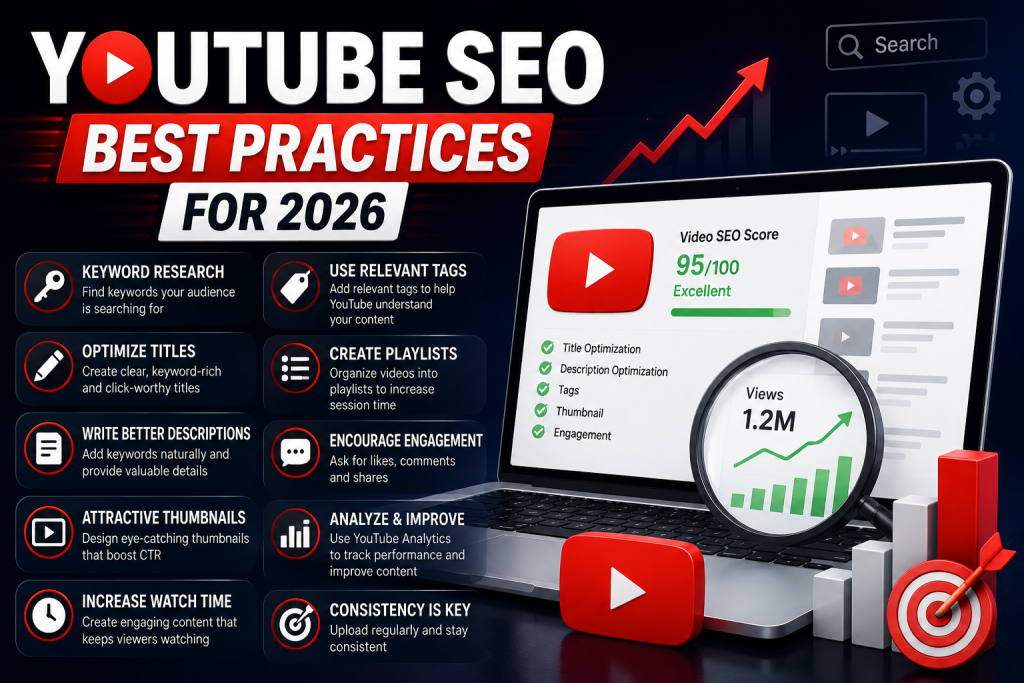
    YouTube SEO best practices for 2026 showing keyword research, optimized titles, descriptions, thumbnails, watch time, analytics, and video rankings

    YouTube SEO Best Practices for 2026

    For the best results, focus on the fundamentals:

    1. Research your audience’s search intent.
    2. Target one primary keyword per video.
    3. Write clear, compelling titles.
    4. Optimize descriptions naturally.
    5. Design attractive thumbnails.
    6. Improve audience retention.
    7. Encourage meaningful engagement.
    8. Create related videos and playlists.
    9. Analyze YouTube Analytics regularly.
    10. Update your strategy based on actual viewer behavior.

    Final Thoughts

    YouTube SEO in 2026 is about much more than inserting keywords into a video. Successful creators focus on search intent, valuable content, compelling packaging, audience retention, and consistent publishing.

    If you’re targeting viewers in the United States, research the questions and problems your U.S. audience is actively searching for, then create videos that provide clear and useful answers.

    Start with keyword research, optimize your title and description, create a strong thumbnail, and focus on keeping viewers engaged. With a consistent YouTube SEO strategy, your channel can build visibility and attract more relevant viewers over time.

    Frequently Asked Questions

    What is YouTube SEO?
    YouTube SEO is the process of optimizing videos and channels to improve visibility in YouTube search and recommendation systems.

    How do I rank my YouTube videos?
    Use relevant keywords, create useful content, optimize your title and description, design an engaging thumbnail, and focus on audience retention and viewer satisfaction.

    Is YouTube SEO still important in 2026?
    Yes. As competition increases, effective optimization can help YouTube better understand your content and connect it with relevant viewers.

    What is the most important YouTube SEO factor?
    There is no single factor that guarantees rankings. Keyword relevance, viewer satisfaction, engagement, retention, and overall content quality all contribute to video performance.