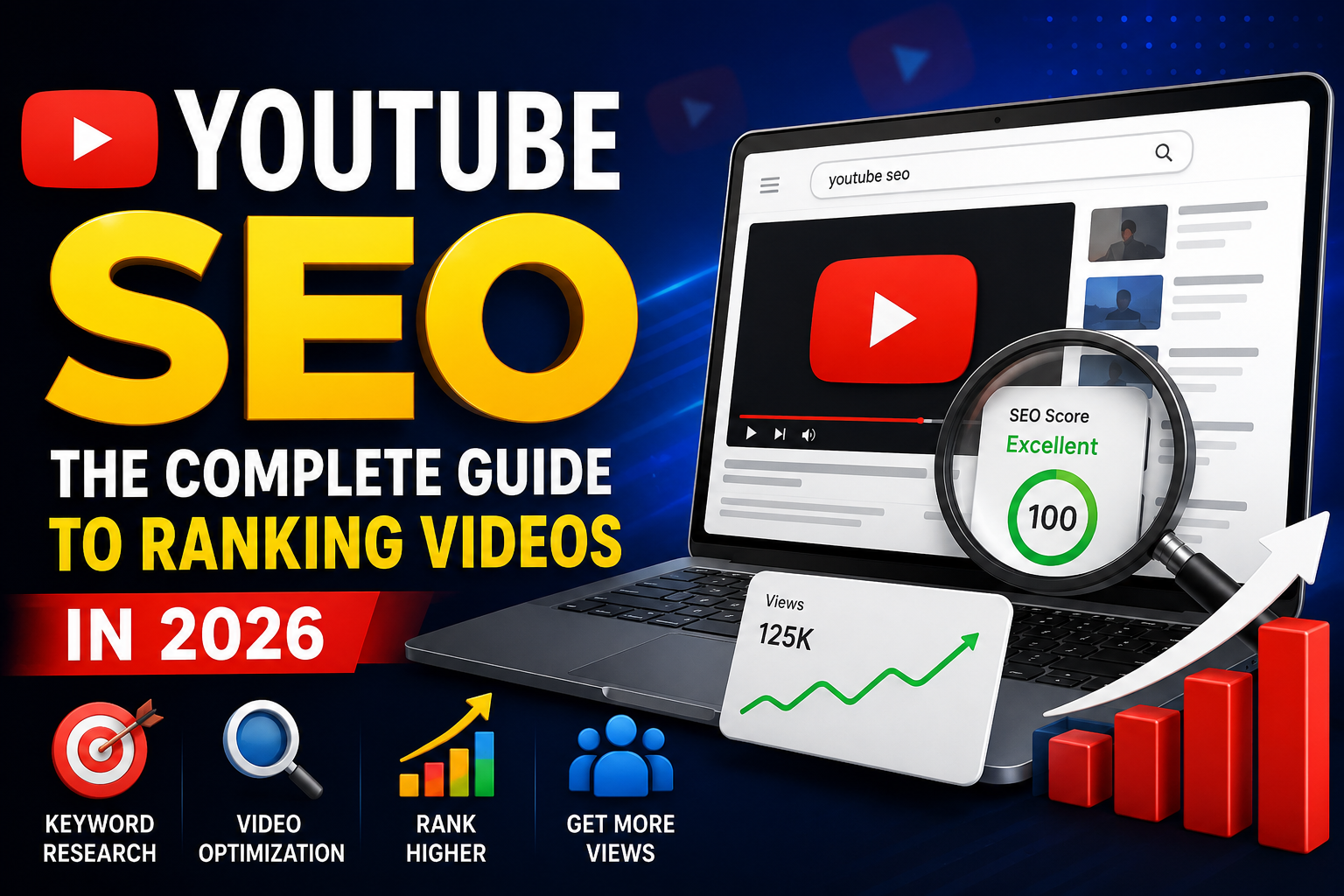
What Is YouTube SEO?
YouTube SEO is the process of optimizing your videos, channel, and content so YouTube can better understand your videos and recommend them to the right viewers. A strong YouTube SEO strategy can help your videos appear in YouTube search results, suggested videos, and other discovery areas.
For U.S. creators, businesses, marketers, and brands, YouTube SEO is especially valuable because it can help reach a large English-speaking audience searching for products, services, information, entertainment, and solutions.
Why Is YouTube SEO Important in 2026?
YouTube is more competitive than ever. Publishing a video is no longer enough to consistently attract viewers. You need to understand what your audience searches for and optimize your content around those interests.
Effective YouTube SEO can help you:
- Increase video visibility
- Reach more targeted viewers
- Improve organic traffic
- Increase watch time and engagement
- Grow subscribers
- Build long-term channel authority
- Generate more opportunities for U.S. audiences and customers
The goal is not simply to get clicks. Your video should satisfy the viewer’s search intent and encourage them to continue watching.
1. Start With YouTube Keyword Research
Keyword research is one of the most important parts of YouTube SEO.
Before creating a video, identify the phrases your target audience is actually searching for. For example, a U.S. audience interested in fitness might search for terms such as “best home workouts,” “how to lose weight at home,” or “beginner workout routine.”
Choose keywords that closely match your video’s topic and search intent.
You can research keywords using YouTube’s search suggestions, Google search results, competitor videos, and SEO tools. Look for specific long-tail keywords because they can be easier to target than extremely broad terms.
2. Create Search-Friendly Video Titles
Your video title should clearly tell viewers what they will learn or discover.
Include your primary keyword naturally while keeping the title interesting enough to encourage clicks.
For example:
Weak:
“Some Tips for You”
Better:
“YouTube SEO: 10 Ways to Rank Your Videos in 2026”
Avoid keyword stuffing. A natural, useful title is better for both viewers and search engines.
3. Optimize Your YouTube Description
Your video description gives YouTube additional context about your content.
Include your primary keyword naturally in the opening section and explain what the video covers. You can also include related keywords, important links, timestamps, resources, and a clear call to action.
For example, if your video is about YouTube SEO, naturally mention related terms such as YouTube keyword research, video optimization, YouTube rankings, and YouTube SEO strategy where appropriate.
4. Create Click-Worthy Thumbnails
Thumbnails are extremely important because they influence whether people click your video after seeing it.
A strong thumbnail should:
- Be easy to understand
- Use clear visual elements
- Have limited text
- Create curiosity
- Match the video’s topic
- Look good on both desktop and mobile
For a U.S. audience, avoid overly complicated designs. A clean, professional thumbnail can often communicate your video’s value faster.
5. Improve Watch Time and Audience Retention
YouTube SEO is not just about keywords. Viewer behavior matters too.
If viewers immediately leave your video, it can be difficult to build strong performance. Start your video with a compelling hook that quickly explains why viewers should continue watching.
Avoid long introductions. Deliver useful information early, maintain a clear structure, and remove unnecessary sections.
The more effectively your video satisfies viewers, the better your chances of gaining stronger engagement and continued discovery.
6. Use Relevant Tags and Hashtags
Tags are less important than they once were, but they can still provide additional context, particularly when your topic has spelling variations or multiple meanings.
Use relevant tags rather than adding dozens of unrelated keywords.
Hashtags can also help categorize content, but they should be relevant and used naturally. Your main focus should remain on the video’s topic, title, thumbnail, description, and viewer experience.
7. Build a Consistent YouTube SEO Strategy
One optimized video can perform well, but consistent optimization can help build a stronger channel over time.
Create content around related topics and organize your videos into playlists. Link relevant videos together so viewers can easily continue watching.
For example, a digital marketing channel could create separate videos covering:
- YouTube SEO
- Keyword research
- Content marketing
- Social media marketing
- SEO tools
- Google SEO
This creates a connected content ecosystem and gives viewers more reasons to stay on your channel.
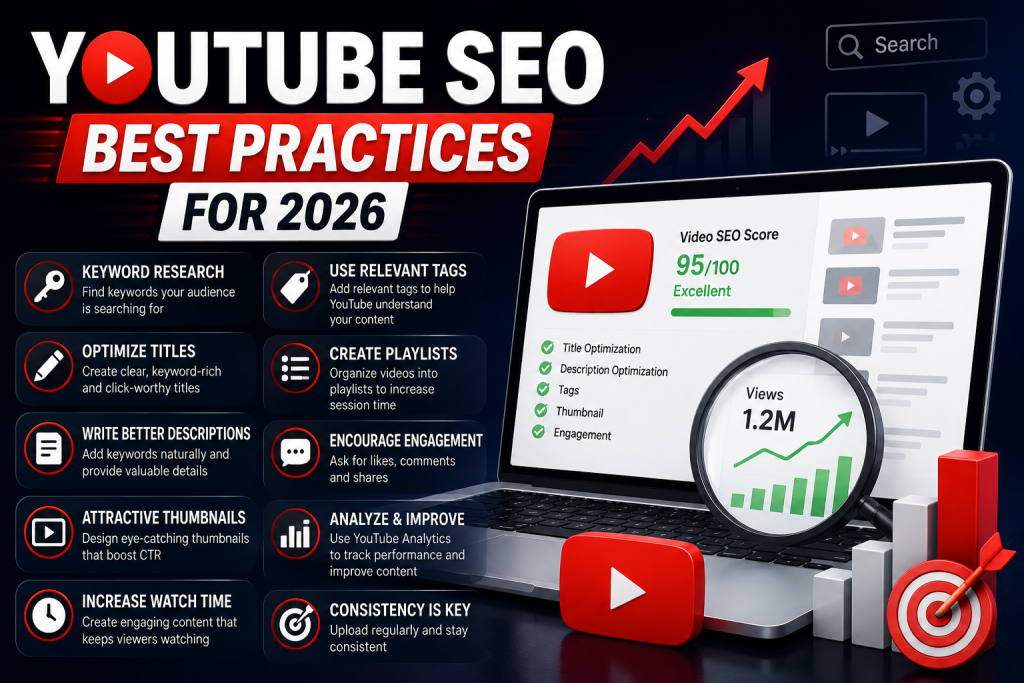
YouTube SEO Best Practices for 2026
For the best results, focus on the fundamentals:
- Research your audience’s search intent.
- Target one primary keyword per video.
- Write clear, compelling titles.
- Optimize descriptions naturally.
- Design attractive thumbnails.
- Improve audience retention.
- Encourage meaningful engagement.
- Create related videos and playlists.
- Analyze YouTube Analytics regularly.
- Update your strategy based on actual viewer behavior.
Final Thoughts
YouTube SEO in 2026 is about much more than inserting keywords into a video. Successful creators focus on search intent, valuable content, compelling packaging, audience retention, and consistent publishing.
If you’re targeting viewers in the United States, research the questions and problems your U.S. audience is actively searching for, then create videos that provide clear and useful answers.
Start with keyword research, optimize your title and description, create a strong thumbnail, and focus on keeping viewers engaged. With a consistent YouTube SEO strategy, your channel can build visibility and attract more relevant viewers over time.
Frequently Asked Questions
What is YouTube SEO?
YouTube SEO is the process of optimizing videos and channels to improve visibility in YouTube search and recommendation systems.
How do I rank my YouTube videos?
Use relevant keywords, create useful content, optimize your title and description, design an engaging thumbnail, and focus on audience retention and viewer satisfaction.
Is YouTube SEO still important in 2026?
Yes. As competition increases, effective optimization can help YouTube better understand your content and connect it with relevant viewers.
What is the most important YouTube SEO factor?
There is no single factor that guarantees rankings. Keyword relevance, viewer satisfaction, engagement, retention, and overall content quality all contribute to video performance.