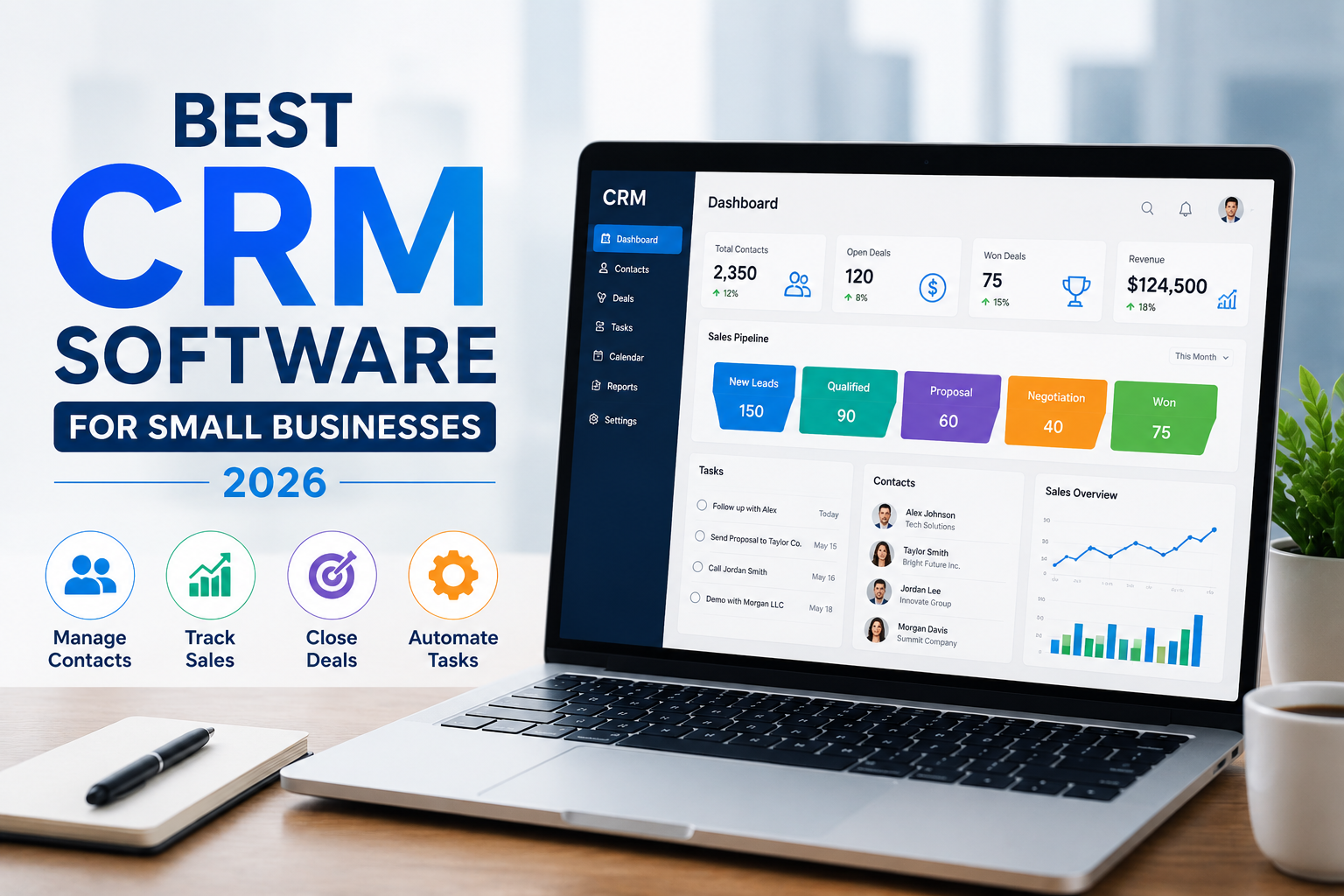
Choosing the best CRM software can make a major difference in how a small business manages leads, customers, sales, and daily communication. A good Customer Relationship Management (CRM) platform helps businesses organize customer information, track sales opportunities, automate repetitive tasks, and build stronger customer relationships.
For U.S. small businesses, the right CRM should be affordable, easy to use, scalable, and capable of supporting sales and marketing without creating unnecessary complexity. In this guide, we’ll explain what to look for when choosing the best CRM software in 2026 and highlight some popular options worth considering.
What Is Best CRM Software?
CRM software is a business tool that stores and organizes customer and prospect information in one central system. Instead of keeping customer details across spreadsheets, emails, and different applications, businesses can use a CRM to manage everything from one dashboard.
Most CRM platforms allow businesses to track leads, manage contacts, monitor sales pipelines, schedule follow-ups, and analyze sales performance. Some also include marketing automation, customer service, reporting, and artificial intelligence features.
Why Small Businesses Need Best CRM Software
A CRM can help small businesses save time and avoid losing valuable sales opportunities. When customer information is organized, sales teams can quickly see previous conversations, upcoming tasks, and the current stage of each deal.
The best CRM software for small businesses can help you:
- Organize leads and customer contacts
- Track sales opportunities
- Automate follow-up tasks
- Manage email communication
- Monitor sales pipelines
- Improve customer service
- Generate business reports
- Track team performance
- Reduce manual data entry
For growing U.S. businesses, these features can create a more organized sales process and make it easier to turn leads into paying customers.
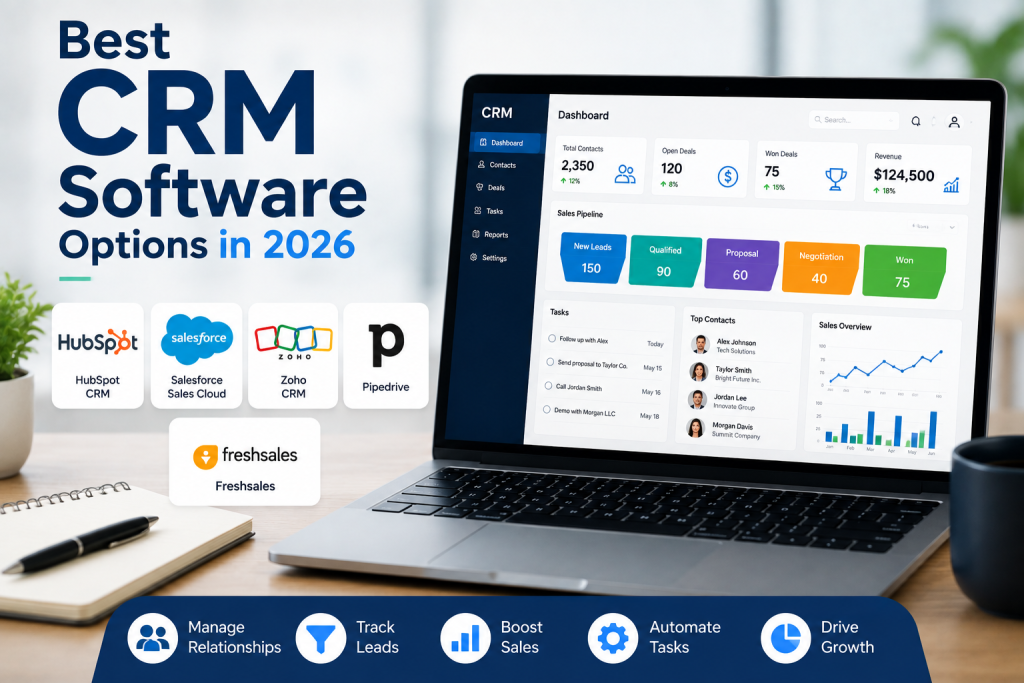
Best CRM Software Options in 2026
There is no single CRM that is perfect for every company. The best choice depends on your business size, budget, industry, sales process, and required features.
1. HubSpot CRM
HubSpot CRM is a popular choice for small businesses that want an easy-to-use platform with sales, marketing, and customer management capabilities. Its interface is designed for businesses that want to get started without a complicated setup.
It can be particularly useful for startups and small teams looking for a CRM that can grow alongside their business.
2. Salesforce
Salesforce is one of the best-known CRM platforms and is designed for businesses that need extensive customization and advanced capabilities. It can support more complex sales processes and larger teams.
However, smaller businesses should carefully evaluate the platform’s features and costs to determine whether its capabilities match their actual needs.
3. Zoho CRM
Zoho CRM is another strong option for small and growing businesses. It provides tools for contact management, sales automation, reporting, and customer relationship management.
Businesses looking for a balance between functionality and affordability may find Zoho CRM worth considering.
4. Pipedrive
Pipedrive focuses heavily on sales pipeline management. Its visual approach can make it easier for sales teams to understand where leads and deals currently stand.
It may be a good choice for small businesses that primarily need a straightforward sales CRM rather than a large all-in-one business platform.
5. Freshsales
Freshsales is designed to help businesses manage contacts, leads, conversations, and sales activities. It can be useful for small and medium-sized businesses looking for CRM features combined with sales productivity tools.
How to Choose the Best CRM Software
Before purchasing a Best CRM Software, consider your business’s actual requirements. Avoid choosing software simply because it has the largest number of features.
Start by evaluating ease of use, pricing, integrations, automation, reporting, customization, mobile access, and customer support. You should also consider whether the CRM can grow with your company.
For example, a small U.S. service business may only need contact management, lead tracking, appointment follow-ups, and email integration. A growing sales team may require advanced automation, reporting, and multiple sales pipelines.
Final Thoughts
The best CRM software in 2026 is the platform that fits your business rather than simply the one with the most features. HubSpot, Salesforce, Zoho CRM, Pipedrive, and Freshsales are all worth researching, but the right choice depends on your budget, team size, sales process, and business goals.
Before making a decision, take advantage of free plans or trials when available. Test the interface, compare essential features, and make sure the Best CRM Software can handle your business as it grows. A well-chosen CRM can help a small business stay organized, follow up with leads more consistently, and build stronger customer relationships.